12 of the Best National Parks to Visit in June in the USA
The best national parks to visit in June feature gushing waterfalls, towering redwood trees, twisty mountain roads, and deep canyons.

June marks the full launch of summer adventures across the United States, making it one of the best (and most popular) months to explore national parks. With longer daylight hours, blooming wildflowers, and most roads and trails fully accessible after winter closures, June offers ideal conditions for outdoor exploration.
Summer vacations start picking up in this month at many destinations though, so this is a great time to visit some of the lesser-known parks if you want to avoid the crowds. If you have to travel while schools are out, early June is still better than the summer peak in July, though. Just be sure to make your reservations for entry and campsites as far in advance as possible for the best options and prices!
From beach parks with Lake Michigan shores to mountain wilderness with glaciers and alpine meadows, these are some of the best national parks to visit in June in the USA.
Best National Parks in June
These U.S. national parks for June offer hiking and sun-drenched landscapes as spring transitions into summer.

Indiana Dunes National Park, Indiana
Located along the southern shore of Lake Michigan, Indiana Dunes National Park packs impressive biodiversity into its 16,000 acres. The park contains 15 miles of coastline, tall sand dunes, prairies, wetlands, and forests all within about an hour of Chicago.
June is an excellent time to explore the diverse ecosystems here. You can hike the Dunes Succession trail at the West Beach for beautiful views, attempt the massive Mount Baldy dune with a ranger (it’s restricted to the public for safety), or take on the 3 Dunes Challenge to the highest peaks in neighboring Indiana Dunes State Park.
The historic Chellberg Farm and Bailly Homestead in the national park offer glimpses into the area’s settlement history, with special programs often scheduled throughout the summer months.
Why Visit Indiana Dunes National Park in June
June brings warm temperatures perfect for swimming and beach activities on Lake Michigan. The park’s wildflowers are blooming, and wildlife is active throughout the diverse habitats. Early June offers a window to explore before peak summer crowds arrive and the longer daylight hours mean you can pack in more adventures, from morning hikes to evening beach sunsets.
Glacier National Park, Montana
Glacier National Park’s crown jewel, the Going-to-the-Sun Road, usually starts to open by June after months of being covered in snow. This 50-mile scenic route crosses the Continental Divide at Logan Pass and is considered one of the most spectacular drives in North America, with jaw-dropping views of glacial valleys, alpine meadows, and mountain peaks.
The park has more than 700 miles of trails, though many high-elevation routes remain snow-covered in June. Lower trails become accessible by this time of year, and wildlife viewing is exceptional as animals emerge from winter with their young. Grizzly bears, mountain goats, bighorn sheep, and elk can all be spotted throughout the park.
Popular activities include hiking to alpine lakes, taking boat tours on the pristine waters, and photographing the dramatic mountain scenery. Just be prepared for variable weather — snow can still fall at higher elevations in the summer season.
Why Visit Glacier National Park in June
June is one of the best times to visit Glacier before the peak summer crowds descend. The Going-to-the-Sun Road can open by mid-June (not guaranteed), giving visitors access to Logan Pass and the park’s most iconic viewpoints. Waterfalls are at their most powerful thanks to snowmelt, creating spectacular cascades throughout the park. Wildlife is highly active, and you may see animals with their young.

Olympic National Park, Washington
One of the best things about Olympic National Park is the variety of scenery, encompassing rugged Pacific coastline, temperate rainforests, and glacier-capped mountains. This diversity makes it one of the most unique parks in the system, offering vastly different experiences within a single visit.
The Hoh Rain Forest averages about 140 inches of rain annually, creating a lush green wonderland where moss drapes from massive trees and ferns carpet the forest floor. The Hall of Mosses Trail is an easy and popular hike through this enchanting landscape.
Along the coast, Ruby Beach and Rialto Beach feature dramatic sea stacks and tide pools teeming with marine life. Hurricane Ridge offers alpine meadows with stunning mountain views, though some higher elevation areas may still have snow in early June. The park also contains lakes, waterfalls (Sol Duc Falls is a must-see), and hundreds of miles of trails.
Why Visit Olympic National Park in June
June is one of the drier months in this notoriously wet park, increasing your chances of clear skies for mountain views. Wildflowers begin blooming in the subalpine meadows at Hurricane Ridge, creating colorful displays against the mountain backdrop.
Most roads and facilities are fully open, giving you access to all three ecosystems. The weather is mild throughout the park, comfortable for hiking without the intense heat found in other regions. Early June is slightly less busy than later in the summer, but you should still plan for crowds and arrive early in the morning to avoid lines at the entry gates and parking lots.

Denali National Park and Preserve, Alaska
Denali National Park and Preserve protects 6 million acres of Alaskan wilderness, including North America’s tallest peak, Denali (also called Mount McKinley), which rises 20,310 feet above sea level. This massive park offers unparalleled opportunities to experience true wilderness and abundant wildlife.
The only route deep into the park, 92-mile Denali Park Road can only be traveled by bus past mile 15, where it turns unpaved. Private vehicles are restricted to protect the landscape and wildlife. Bus tours offer the best chance to spot grizzly bears, caribou, Dall sheep, moose, and wolves against a backdrop of tundra and mountains.
Hiking in Denali is a unique experience, as there are few marked trails beyond the entrance area. Instead, visitors practice wilderness hiking, choosing their own routes across the open tundra. Mountaineers come from around the world to attempt summiting Denali, though most visitors are content to admire the peak from viewpoints when weather permits.
Why Visit Denali National Park in June
Summer, mid-May through mid-September, is really the best time to visit Denali, as this is when services and activities are available (including the bus tours). June marks the height of Alaska’s midnight sun season, with about 20 hours of light. These extended days means you can maximize your time exploring and wildlife watching.
The park’s single road typically opens fully by early June, allowing bus tours to travel deep into the wilderness (current road repairs have it closed around mile 43). Wildlife is extremely active as animals take advantage of the brief summer to feed and raise young. Wildflowers begin blooming across the tundra, creating colorful displays.
Hawaii Volcanoes National Park, Hawaii
Hawaii Volcanoes National Park on the Big Island showcases the raw power of volcanic forces that created the Hawaiian Islands. The park encompasses two active volcanoes, Kīlauea and Mauna Loa, along with diverse landscapes ranging from sea level to 13,681 feet elevation.
Crater Rim Drive runs along Kīlauea Caldera, providing access to steaming vents, volcanic craters, and lava tubes. The Thurston Lava Tube is a popular walk-through tunnel carved by lava hundreds of years ago. Chain of Craters Road descends from rim to coast, passing numerous volcanic features and sometimes even active lava flows.
Hiking options range from easy paved trails to challenging backcountry routes across lava fields. The park also protects rare rainforest habitat and archeological sites significant to Native Hawaiian culture.
Why Visit Hawaii Volcanoes National Park in June
June falls outside Hawaii’s peak winter tourist season but before the heaviest summer crowds arrive, plus the Big Island only ranks third for the busiest of Hawaiian Islands. June temperatures are moderate, and elevation changes in the park can mean a difference of 15 degrees from coast to summit. June’s weather is generally drier than winter months, reducing the chance of rain affecting your visit.

Canyonlands National Park, Utah
Canyonlands preserves a vast landscape of colorful canyons, mesas, and buttes carved by the Colorado and Green Rivers. Divided into four districts — Island in the Sky, the Needles, the Maze, and the Rivers — each section offers different experiences and requires separate visits.
Island in the Sky is the most accessible area, perched 1,000 feet above the surrounding terrain about 30 miles from the town of Moab, Utah. Mesa Arch frames a spectacular sunrise view, while Grand View Point Overlook provides panoramic vistas of the layered canyonlands. The Needles district features colorful spires and more challenging hiking in a backcountry atmosphere with limited services.
The park offers everything from short overlook walks to multi-day backpacking expeditions. Four-wheel drive roads provide access to remote areas, and the rivers offer opportunities for rafting and kayaking through towering canyon walls.
This guide will help you plan a trip to Arches and Canyonlands national parks.
Why Visit Canyonlands National Park in June
This part of Southern Utah is the high desert, but summer still gets pretty hot (over 100 degrees at peak). Early June offers a chance to explore outside the busy spring months before it gets too uncomfortable for hiking, though hitting the trails earlier in the morning is best. The park is less crowded than nearby Arches National Park, giving you more solitude to appreciate the expansive landscapes.

Black Canyon of the Gunnison National Park, Colorado
Black Canyon of the Gunnison protects one of the steepest and most dramatic canyons in North America. The Gunnison River has carved a narrow gorge through dark Precambrian rock, creating sheer walls that rise over 2,200 feet. In places, the canyon is so narrow that sunlight only reaches the bottom for brief periods.
The South Rim is more accessible and offers numerous overlooks connected by a scenic drive. Painted Wall, the tallest cliff in the state, is a must-see. The rugged North Rim has fewer visitors and more unpaved roads, with spectacular views from a different perspective.
Experienced hikers can descend steep and challenging routes to the canyon bottom that require permits and careful preparation.
This Colorado road trip guide includes a stop at Black Canyon of the Gunnison.
Why Visit Black Canyon of the Gunnison National Park in June
June offers more pleasant temperatures for hiking at the rim elevations than in July or August. The North Rim road usually opens in May after winter closures, giving access to that side of the canyon.
The dramatic play of light and shadow in the deep canyon creates stunning photo opportunities, especially during morning and evening golden hours. This is one of the least-visited national parks in the Lower 48, so even summer crowds are lower here.
Redwood National and State Parks, California
Home to the world’s tallest trees, Redwood National and State Parks protect ancient coastal redwood forests along California’s northern coast. Walking among these towering giants is an awe-inspiring experience — some are over 300 feet tall and more than 2,000 years old.
The parks encompass both redwood groves and nearly 40 miles of coastline. Popular trails include Lady Bird Johnson Grove, a short loop through old-growth forest, and Fern Canyon Loop, where 50-foot walls draped in ferns create a breathtaking atmosphere. The coastal section offers tide pooling, beach walks, and opportunities to spot whales, sea lions, and seabirds.
Drive the scenic Newton B. Drury Scenic Parkway with trees soaring overhead or venture onto unpaved Howland Hill Road, where the redwoods are said to “kiss your car.” The parks are also home to Roosevelt elk, which can often be seen grazing in the meadows.
Why Visit Redwood National and State Parks in June
June offers mild temperatures and low precipitation, making it easier to appreciate both the forests and coastline. The weather is perfect for hiking the numerous trails without dealing with winter’s muddy conditions.
Rhododendrons bloom through mid-June, adding splashes of pink to the lush green understory. The parks are typically less crowded in early June than in July and August, though still busy.

New River Gorge National Park and Preserve, West Virginia
New River Gorge protects a deep canyon carved by one of the oldest rivers in the country. Despite its name, the New River is actually ancient, and has created a dramatic gorge more than 1,000 feet deep through the Appalachian Mountains.
The iconic New River Gorge Bridge spans the canyon, and various overlooks provide breathtaking views of the steel arch. The park offers incredible whitewater rafting on the river, with Class III to V rapids challenging even experienced paddlers. Rock climbing on the gorge’s walls attracts climbers from around the world.
More than 40 miles of trails wind through forests, along the river, and to historic sites like abandoned coal towns. You can also book bridge tours to step along the catwalk 25-feet under the New River Gorge Bridge.
These are 12 of the best things to do in New River Gorge.
Why Visit New River Gorge National Park in June
June brings warm temperatures ideal for water activities like rafting and kayaking in the New River. The forest canopy is fully leafed out, creating a lush green landscape throughout the gorge. Water levels are generally good for rafting, with spring runoff providing exciting rapids that start to mellow by summer. The long daylight hours also allow for extended adventures on the river or trails.

Grand Teton National Park, Wyoming
Grand Teton National Park features one of the most dramatic mountain landscapes in the United States. The jagged Teton Range rises abruptly from the valley floor, creating a stunning backdrop for the Snake River and Jackson Hole valley.
Iconic views like Mormon Row, Chapel of the Transfiguration and Schwabacher Landing provide classic photo opportunities of the peaks. Jenny Lake, at the base of the mountains, offers boat shuttles across the water to access popular trailheads to Inspiration Point and Hidden Falls. For more challenging adventures, numerous trails climb into the alpine zone with panoramic views.
Wildlife abounds in Grand Teton, with moose, bison, and elk often spotted in willow flats and meadows.
Read our Grand Teton itinerary to plan your trip!
Why Visit Grand Teton National Park in June
June marks the transition to summer in the Tetons, with most valley trails accessible and snow retreating to higher elevations. Wildflowers bloom in the meadows, creating colorful displays against the mountain backdrop. Wildlife viewing is excellent as animals are active and visible in open areas with their young. June sees increasing visitation but hasn’t yet reached peak July and August crowd levels.
Bryce Canyon National Park, Utah
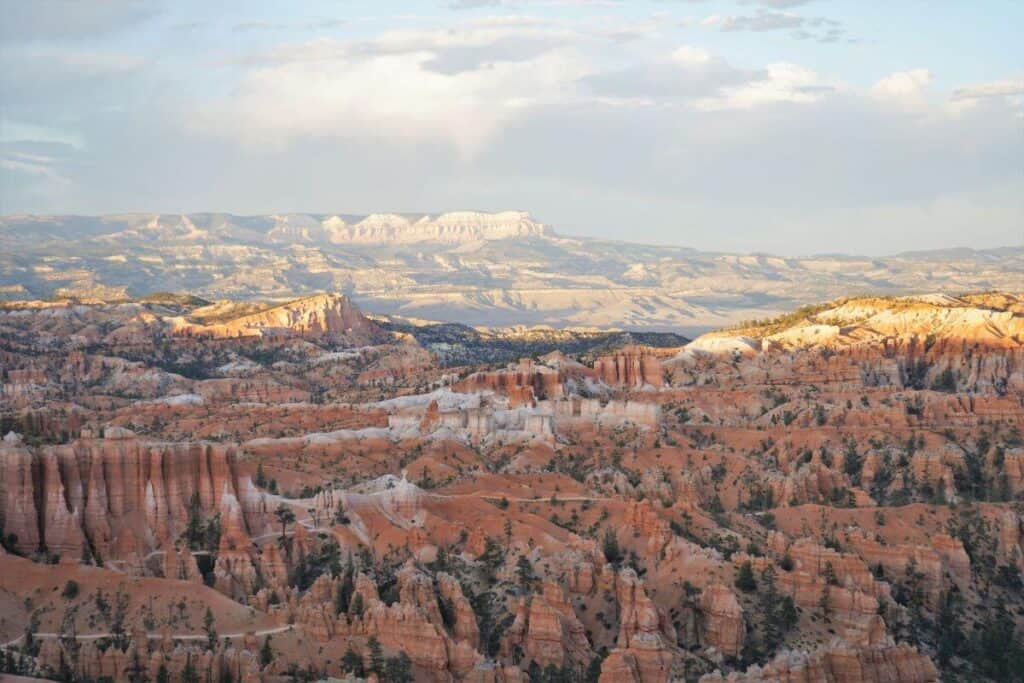
Bryce Canyon National Park contains the largest concentration of hoodoos on Earth. These orange and red spires fill an amphitheater-like basin, creating a landscape that seems like it could be one another planet.
An 18-mile scenic drive connects numerous viewpoints along the rim, each offering different perspectives of hoodoos and other rock features. Sunrise and Sunset Points are aptly named for their spectacular light shows. For a closer look, trails descend into the amphitheater, allowing you to walk among the towering spires.
The Queen’s Garden to Navajo Loop combination is the most popular hike, where the unique Wall Street section of towering rock walls creates a narrow corridor.
Check out our guide to the best things to do in Bryce Canyon.
Why Visit Bryce Canyon National Park in June
Bryce sits at an average 8,000 feet elevation, making it cooler than other Utah national parks and providing welcome relief from the summer desert heat. June offers milder temperatures than July or August, perfect for hiking into the canyon. All trails and viewpoints are accessible by late spring. This is also the driest month of the year, before the monsoon season sets in from July through September.
Isle Royale National Park, Michigan
Isle Royale is one of the most remote and least-visited national parks in the country, accessible only by boat or seaplane from Michigan or Minnesota. This wilderness island in Lake Superior offers a pristine backcountry experience with minimal development.
The park is famous for its wolf and moose populations, which have been studied for decades in predator-prey research projects. Miles of trails crisscross the island, offering day hikes and connecting campgrounds for backpacking trips.
Kayaking around the island’s rocky shores and harbors provides access to remote coves and opportunities to spot wildlife. The island’s isolation creates exceptional opportunities for solitude and experiencing true wilderness.
Why Visit Isle Royale National Park in June
Isle Royale National Park is only open from mid-April through the end of October, making June one of the first months you can fully access the park. Wildflowers are blooming across the island, creating colorful displays along the trails.
Moose and other wildlife are active, and you’ll have good chances of spotting them along inland lakes and ponds. The weather is warming but not yet hot, making hiking comfortable. Lake Superior remains quite cold, so water activities require proper gear.
Read Next:
10 Best National Parks to Visit in January
12 Best National Parks in February
10 Best National Parks to Visit in March
10 Best National Parks to Visit in April
12 Best National Parks to Visit in May