The Best One Day in Bryce Canyon National Park Itinerary for Your First Time
This one day in Bryce Canyon itinerary includes the best hikes and views at the Utah national park known for its orange hoodoos.
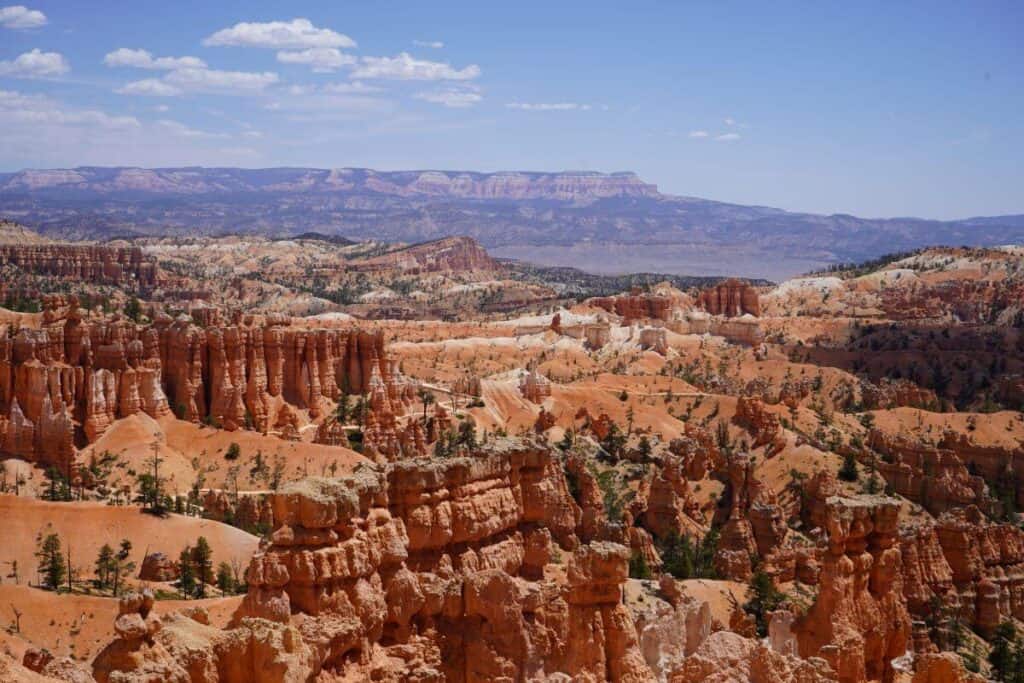
Visiting Bryce Canyon in one day and looking for the best things to do? This Bryce Canyon National Park guide takes you to the best scenic overlooks and hikes where you can get up close with the unique rock hoodoos the park is known for.
Bryce Canyon National Park in southern Utah consists of a series of natural amphitheaters that drop down from a high plateau. Most of the activities on this itinerary take place around the popular Bryce Amphitheater, which is full of hoodoos, irregular rock spires carved by erosion into all sorts of shapes and sizes.
Despite the sweeping views and miles of trails, it’s actually pretty easy to see most of the national park with just one day at Bryce Canyon. Some of the best vistas are all along a free shuttle route, and there are some short trails into the canyon that you can tackle in just a couple of hours.
I’ve visited this park twice now and the itinerary below has my favorite hikes and lookouts that I recommend for your first time. Keep reading for ideas on how to spend one day in Bryce Canyon National Park and scroll to the bottom for tips on where to stay and the best time to visit Bryce Canyon.
What is a Hoodoo?
The hoodoos at Bryce Canyon are one of the most unique features that draw visitors here. The park actually has the world’s largest concentration of hoodoos. But what is a hoodoo?
Hoodoos are a type of rock column or spire that has been eroded by ice and rain into different shapes and sizes. According to the National Park Service, Bryce Canyon receives at least 170 nights each year where temperatures hit both above and below freezing temperatures. This allows water that seeps into the rocks to freeze and expand, slowing breaking the plateau here down into stacks of rocks.
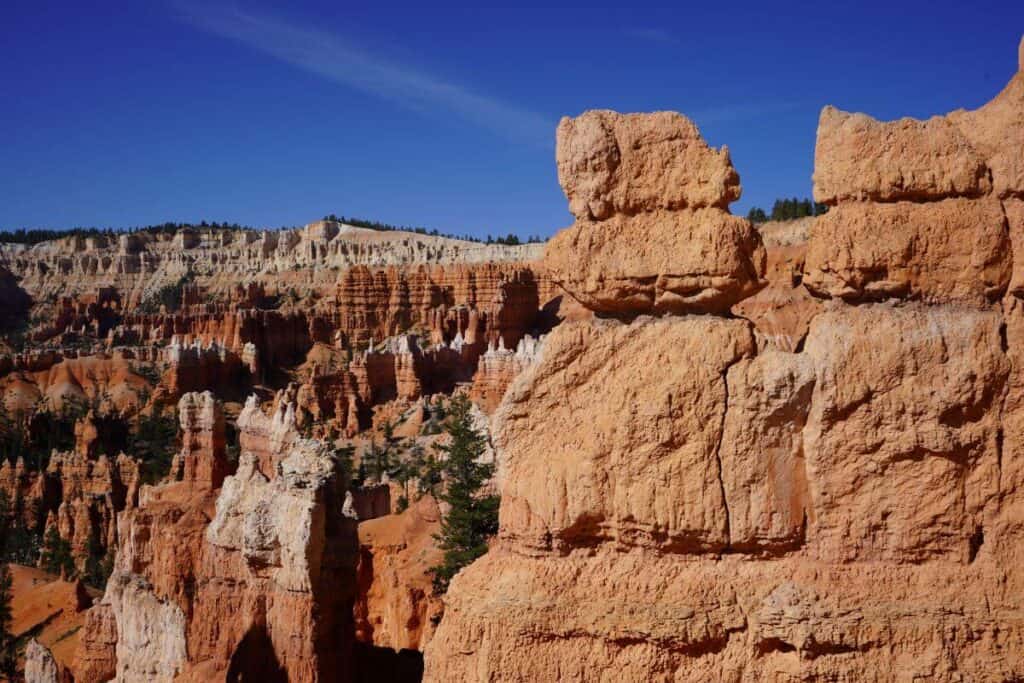
If you look closely, some of the formations resemble objects or people, gaining nicknames like, “Thor’s Hammer” and “Queen Victoria.”
Bryce Canyon National Park Map
I’ve added all of the hikes and activities in this one day in Bryce Canyon itinerary to the map below to help you get started on your planning. Just click the little box in the upper right corner to open and save a Google map.
One Day in Bryce Canyon Itinerary
This one day Bryce Canyon National Park itinerary packs in activities from sunrise to sunset. If you don’t want to hike, you can spend just a few hours in the park visiting the lookouts.
Sunrise at Sunrise Point
If you get an early start for your day at Bryce Canyon, head over to Sunrise Point at dawn. As the first light streams into the amphitheater, the hoodoos glow with golden beams.
If the actual lookout is too busy at sunrise, walk along the rim to find a less crowded view. There’s a mile-long trail between Sunrise and Sunset Points along the canyon, so it’s easy to find your own spot.

Bryce Canyon Hikes
After checking out the rim views, hiking into the amphitheater is the best thing to do with one day in Bryce Canyon National Park. You’ll want to start early in the summer months to avoid the heat and the heavier crowds at midday.
Since there are several trails to follow, I’ll break down a few options below and you can pick the hike that suits you best. You’ll need to be moderately fit and wearing appropriate footwear to get up and down the trails. There is elevation change and some parts are pretty steep.
If you don’t want to hike into the canyon, skip ahead to the next activity.
Navajo Loop Trail
Distance: 1.3 miles
Time: Approximately 1-2 hours
Difficulty: Moderate
The shortest hike into the canyon, Navajo Loop Trail starts at Sunset Point. You can walk down either the Two Bridges section or the popular Wall Street switchbacks that wind down between soaring rust-colored walls. Whichever direction you pick, come up the opposite way to make a moderately difficult 1.3-mile loop with a 550-foot elevation change.
The Wall Street portion closes for at least half of the year when ice makes the steep switchbacks dangerous. When it’s closed, you’ll either have to hike out and back on the Two Bridges trail or combine it with Queen’s Garden to make a loop (more info below).

Queen’s Garden Trail
Distance: 1.8 miles
Time: Approximately 1-2 hours
Difficulty: Moderate
Queens Garden is the easiest trail into the canyon but still considered a moderate hike for the 350-foot elevation change. The 1.8-mile hike starts and ends at Sunrise Point.
Along the way, you’ll walk through tunnels and next to hoodoos in cool formations. Since this trail does not make a loop, many hikers combine it with the Navajo Loop (details below).
Queen’s Garden and Navajo Loop
Distance: 2.9 miles
Time: Approximately 2-3 hours
Difficulty: Moderate
The most popular Bryce Canyon National Park hike, this option combines the Queen’s Garden Trail with half of the Navajo Loop to make a larger circle. You can either start from Sunrise Point and descend Queen’s Garden or start from Sunset Point and descend the Navajo’s Two Bridge or Wall Street sections. Finish the loop by hiking up the other path.
Since Queen’s Garden is the least steep, the easiest route is to descend Navajo and ascend Queen’s Garden. But, the National Park Service recommends descending Queen’s Garden as the safest way to hike the trail, since more injuries happen on the way down. You’ll also get better views of the Bryce Amphitheater going down Queen’s Garden. I hiked it by heading down on Queen’s Garden and back up on Wall Street.
The total loop is 2.9 miles, including a half-mile walk along the rim between the starting and ending lookout points. It’s considered moderately difficult. This is my favorite hike to do with one day in Bryce Canyon!

Peekaboo Loop
Distance: 5.5 miles
Time: Approximately 3-4 hours
Difficulty: Strenuous
Peekaboo Loop descends over 1500-feet from Bryce Point into the canyon, making a 5.5-mile path with views of hoodoos and bristlecone pines.
The National Park Service rates it a strenuous hike. The trail is shared with mule riders, so you have to watch where you step. Also, it is required that you follow a clockwise direction on the trail.
The Peekaboo trail meets the Navajo and Queen’s Garden trails at the bottom of the canyon, so there are a few different combos you can hike with the three. I’ll detail what’s called the Figure 8 Combo (all three) below, but the other options are a Navajo/Peekaboo figure 8 for 4.9 miles or the Bryce Amphitheater Traverse, where you descend Peekaboo and ascend Queen’s Garden for 4.7 miles total.
Figure 8 Combo
Distance: 6.4 miles
Time: Approximately 4-5 hours
Difficulty: Strenuous
For the ultimate day hike, carve out 4 to 5 hours to make a figure 8 on the Queen’s Garden, Peekaboo, and Navajo trails. The strenuous trek spans 6.4 miles and a little over 1,600-feet in elevation changes.
To follow this hike, start by descending the Navajo or Queen’s Garden trail, hopping on the Peekaboo at the bottom of the canyon, and climbing out on the Navajo or Queen’s Garden when you’ve finished the loop.
Fairyland Loop Trail
Distance: 8 miles
Time: Approximately 4-5 hours
Difficulty: Strenuous
For a long hike into a canyon that’s a little less popular than the ones above, try the Fairyland Loop. The trail starts a mile north of the park entrance station at Fairyland Point and covers 8 miles along the rim and into the Fairyland Canyon.
The hoodoos on this trail include giant formations like the Tower Bridge and China Wall.
Since the hike takes about 4 to 5 hours, you’ll want to get an early start if you’re visiting Bryce Canyon in one day.

Viewpoints on the Rim Trail
There are four main viewpoints of the Bryce Amphitheater — Bryce Point, Inspiration Point, Sunset Point and Sunrise Point. With one day in Bryce Canyon National Park, you will have time to visit all of these spots.
To get to them, you can either drive, ride the shuttle, or walk the easy Rim Trail for about 3 miles one way (ride the shuttle to return). Parking fills up in the second half of the day, so walking or using the free shuttle is the easiest way to hop around.
Bryce Canyon Scenic Drive
After a morning hike, sunny afternoons are the perfect time to cruise down Bryce Canyon Scenic Drive. This route offers some of the less crowded overlooks. The free park shuttle only goes as far as Bryce Point, so traffic tends to clear out down the road.
The drive spans 17 miles each way between the entrance station and Rainbow Point at the end of the road. Along the way, more than a dozen stops offer views of canyons, natural arches, pine trees, and Grand Staircase-Escalante National Monument in the distance. This road usually closes seasonally for ice and snow.
Sunset at the Bryce Amphitheatre
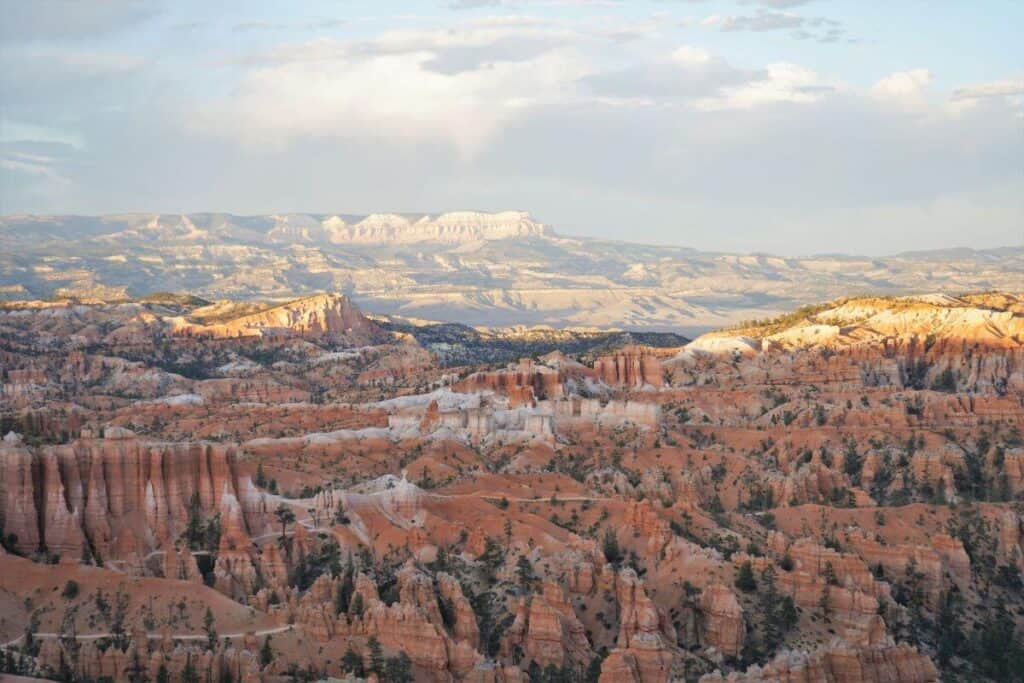
Since all the viewpoints here face east, the sun sets behind you as you look out at the canyon. But, that doesn’t mean you’ll miss out on a colorful sunset show to end your one day at Bryce Canyon.
Return to your favorite viewpoint from the day an hour or two before sunset to watch golden light hitting the hoodoos as a wall of shadows creeps over the canyon. It’s one of the best times of day to really soak in the views without the sun in your eyes!
Constellation Tours and Full Moon Hikes
Stay in the park past sunset in order to join special ranger-led programs to explore the night skies. Bryce is certified as an International Dark Sky Park.
A daily evening program runs throughout summer at the outdoor North Campground Amphitheater. A few times a week, rangers do a constellation tour and on full-moon nights, a special hike by moonlight. Information on all of the programs is available at the visitor center.
Tips for Visiting Bryce Canyon in One Day
This Bryce Canyon guide has tips on what to pack, how to save on admission, and where to stay nearby.

Best Time to Visit Bryce Canyon
The most popular time to visit Bryce Canyon is May through September. Bryce Canyon National Park weather averages in the upper 70s to low 80s for the middle of summer highs. Late spring and September typically only hit the 60s and low 70s midday.
Due to the high elevation, even summer nights drop to the 40s and 50s. July and August is the rainy season with regular afternoon storms.
If you visit October to April, you’ll find lower crowds but limited services and amenities. Also, average nighttime lows are below freezing with snow, causing some park roads to close as early as October. The shuttle typically only runs from April to mid-October.
Daytime highs cool to the 40s and 50s in autumn and spring, while winter months see highs in the 30s. Monthly snowfall averages 14 to 18 inches during this time.
How Many Days in Bryce Canyon
While there are miles of backcountry trails and activities to extend your national park stay, one day in Bryce Canyon is enough time for most visitors to see the viewpoints and go on a hike.
With even half a day at Bryce Canyon, you can see the four main amphitheater lookouts and hike a short trail like the 1.3-mile Navajo Loop.
How to Get to Bryce Canyon
If you’re traveling straight to Bryce Canyon National Park, the nearest airports are in Salt Lake City, Utah, about 275 miles north, and Las Vegas, Nevada, about 270 miles southwest. For a Southwest road trip in the area, it might also make sense to fly into Phoenix.
The Bryce Canyon map at the top of this post shows the park’s location in relation to other regional attractions.
Where to Stay at Bryce Canyon
The closest place to stay near Bryce Canyon National Park is inside the park at the Lodge at Bryce Canyon or the North or Sunset campgrounds. The lodge and campgrounds are both just steps from the rim near the Sunrise and Sunset viewpoints. Reservations fill up quickly, so it’s important to book early.
Bryce Canyon City is the next closest locale, less than 3 miles from the entrance. Bryce Canyon hotels here include the Best Western Plus Bryce Canyon Grand Hotel, Ruby’s Inn Resort, and Bryce View Lodge.
The cheapest hotels near Bryce Canyon are in the small town of Tropic, about 11 miles from the park entrance. There are several motels, cabins and restaurants along Main Street here. I stayed at the Red Ledges Inn, which was basic but affordable and comfortable with a free continental breakfast.
These are the closest towns to Bryce Canyon National Park.
Bryce Canyon Tickets and Passes
Admission for to the park is $35 per vehicle, which is valid for 7 days. If you plan to visit other Utah national parks on one trip, it’s worth purchasing an America the Beautiful pass. It’s good for admission to all National Park Service managed sites for one year for $80 (or $20 for US citizens ages 62 and up).
What to Pack for Bryce Canyon
For one day at Bryce Canyon, you can either wear casual sightseeing outfits or activewear and hiking shoes for the trails. I recommend bringing a day pack or hiking backpack, a reusable water bottle, a hat with shade, and sunscreen. Trekking poles may be helpful if you like to use them for hikes with elevation change.
What to Do Near Bryce Canyon
There are tons of gorgeous state and national parks and other incredible scenery all around Bryce Canyon National Park that you can visit on a Utah road trip.
Many people pair Bryce with a visit to Zion National Park in southwest Utah. Bryce Canyon to Zion is about 75 miles. Here’s how you can visit Bryce Canyon and Zion in one road trip.
Other attractions in the area include Grand Staircase-Escalante National Monument, Kodachrome Basin State Park, Red Canyon, Scenic Byway 12, Cedar Breaks National Monument, the Grand Canyon North Rim, and Page, Arizona.