The Best 2 Days in Zion National Park Itinerary for Your First Time
This 2 days in Zion National Park itinerary will help you plan your first trip to the stunning destination in southern Utah.
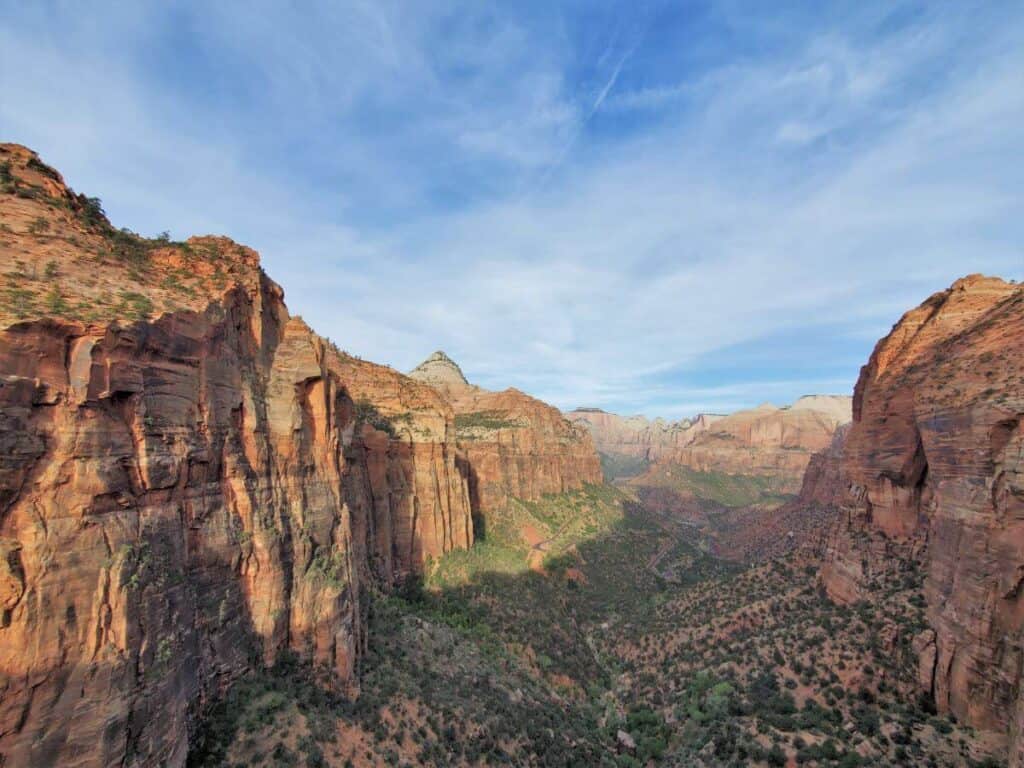
From the soaring canyon walls in hues of pink and orange to the gushing waterfalls and river, Zion National Park is packed with breathtaking scenery. With so many bucket list hikes and scenic drives, it can be overwhelming to know just what to focus on for your first trip to the park.
That’s where this Zion National Park 2 day itinerary comes in handy. I’ve visited the park a few times to check out the most popular trails and activities and put together this guide with the best things to do on your first trip.
The park has something for everyone, whether you’re looking for challenging hikes that will get your heart pumping or easy nature walks and bike rides the whole family can join in. Below you’ll find a list of activities, a few different 2 day Zion itineraries for mega adventures or low-key sightseeing, and a round-up of tips and suggestions for where to stay and when to visit the park.
Don’t skip the section with the Zion Pledge to learn how to be a responsible visitor and protect the park for future generations.
Keep reading for my 2 days in Zion National Park itinerary!
Zion National Park Map
There are a few different sections of Zion National Park, but most of the popular things to do are in Zion Canyon. Since this itinerary is for just 2 days in Zion, we’ve focused on Zion Canyon, with a couple of extra ideas in the Kolob Canyons section of the park.
All of the activities from the itinerary below are pinned onto this map to help you plan. You can click on it to open a Google Map and save a copy
Best Things To Do in Zion National Park
These are some of the most scenic and epic things to do in Zion National Park on your first visit.
Angels Landing via West Rim Trail
The hike to Angels Landing is one of the most popular in Zion. It ends at a narrow ridge with chains to help you climb to the top. The West Rim Trail to Angels Landing is a challenging 5.4-mile round trip route that gains 1,488 feet.
You need a reservation to access the final stretch of Angels Landing with the chains, and permits are distributed during a seasonal lottery and a day-before lottery. To reach the trailhead, take the park shuttle to stop 6 at the Grotto.
The hike takes most people around 4 hours to finish, so this activity will take up about half a day during your 2 days in Zion National Park. If you’re looking for something easier with a great view of the canyons, I recommend the Canyon Overlook Trail instead, which I’ll tell you more about below.
The Narrows Hike
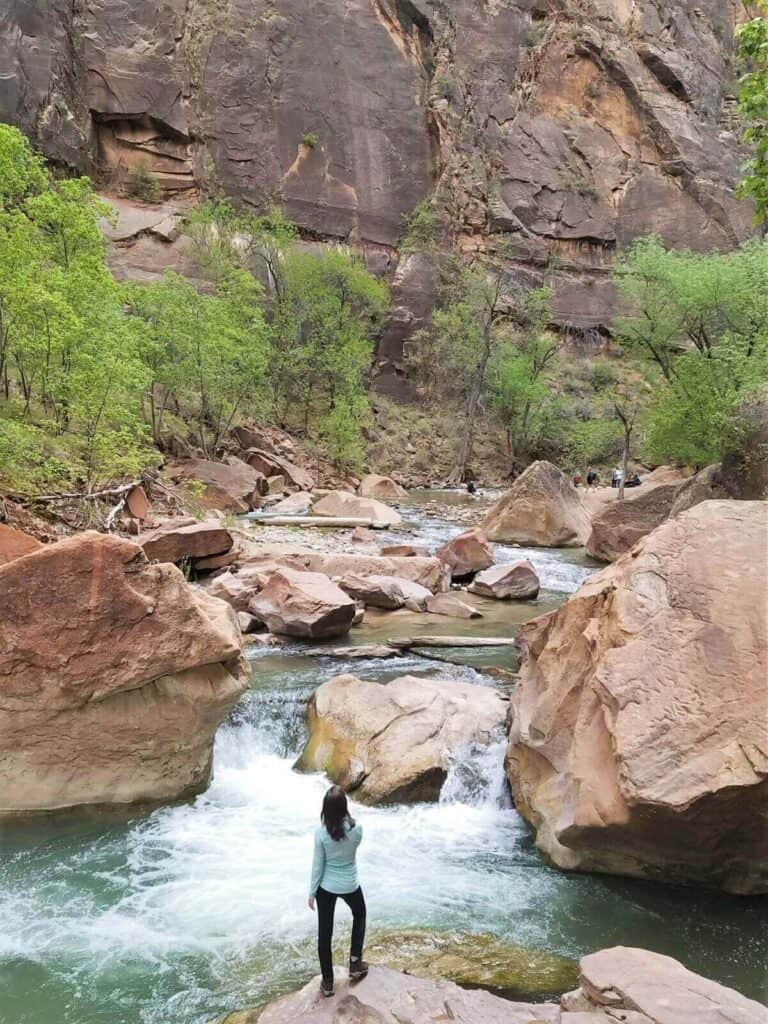
Another bucket list hike at Zion, the Narrows goes into the tightest section of the canyon formed by the Virgin River, where the walls soar a thousand feet overhead and get closer and closer together. Some sections are just 20 to 30 feet wide.
The footpath here starts with the Riverside Walk trail, which ends after a mile. From there, you’ll have to walk and wade in the water to continue the route. The Narrows Bottom-Up Hike from the Temple of Sinawava is an out-and-back trail, so you can just hike for a couple of miles, or take on an all-day adventure to go 9.4 miles round trip to the Big Spring, the farthest you can go without a permit.
This is a hike you really need to research and prepare for before arrival. Sometimes river and water conditions make it unsafe, so check in with the National Park Service before attempting it. You also need to be prepared with the right gear, like hiking poles, canyoneering boots, neoprene socks, and waterproof backpacks, which are available from outfitters in Springdale.
The Narrows trek can take all day or just a couple of hours, depending on how far you wish to go. If you only have 2 days in Zion and are also hiking to Angels Landing, you may want to do just a couple of miles here so that you’ll have time for other activities.
Riverside Walk
If you want to see the gorge up close, but a hike in the water doesn’t sound appealing, the Riverside Walk is still worth the excursion. Starting at the Temple of Sinawava, this 2.2-mile round trip path follows the river, with the canyon walls growing taller overhead as you go.
The easy trail is mostly flat and paved, so it’s more family-friendly. It ends at the banks of the Virgin River, where you can either start the Narrows hike or turn around to return the way you came.
You’ll only need an hour or so for this trail, plus time to ride the shuttle.
Emerald Pools Trails
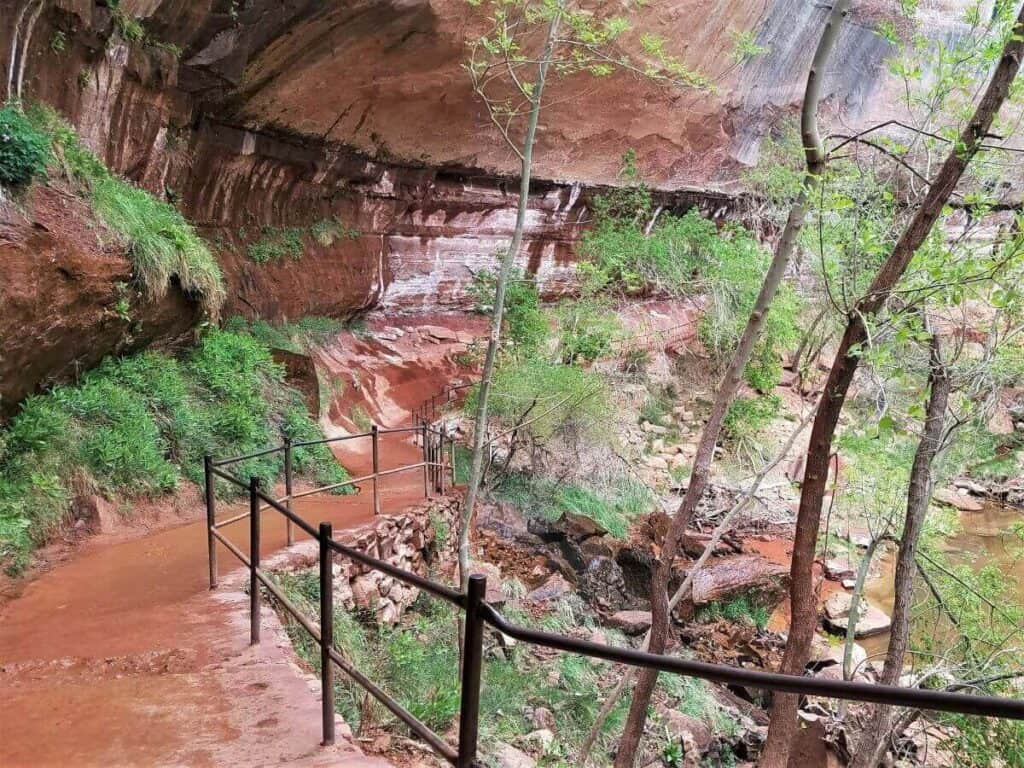
The Emerald Pools in Zion are a series of runoff basins and seasonal waterfalls. It’s the perfect hiking area for all visitors because you can choose from short and easy paths or more moderate hikes.
The Emerald Pools Trail at the Zion Lodge shuttle stop 5 and the Kayenta Trail at the Grotto shuttle stop 6 both connect to the pools, so you can do out-and-back hikes to where you start or connect the paths and hop on the shuttle at a different stop. I recommend reviewing the Zion trail map to plan your route.
The hike to the Lower Emerald Pools is easy and 1.2 miles roundtrip out and back. You can walk underneath the waterfall at this one and look down into the pond. From there, the trail climbs steeply up to the Middle Emerald Pools. Hiking to this one is about 2.2 miles round trip.
Continuing to the Upper Emerald Pools adds a mile to the hike.
Canyon Overlook Trail
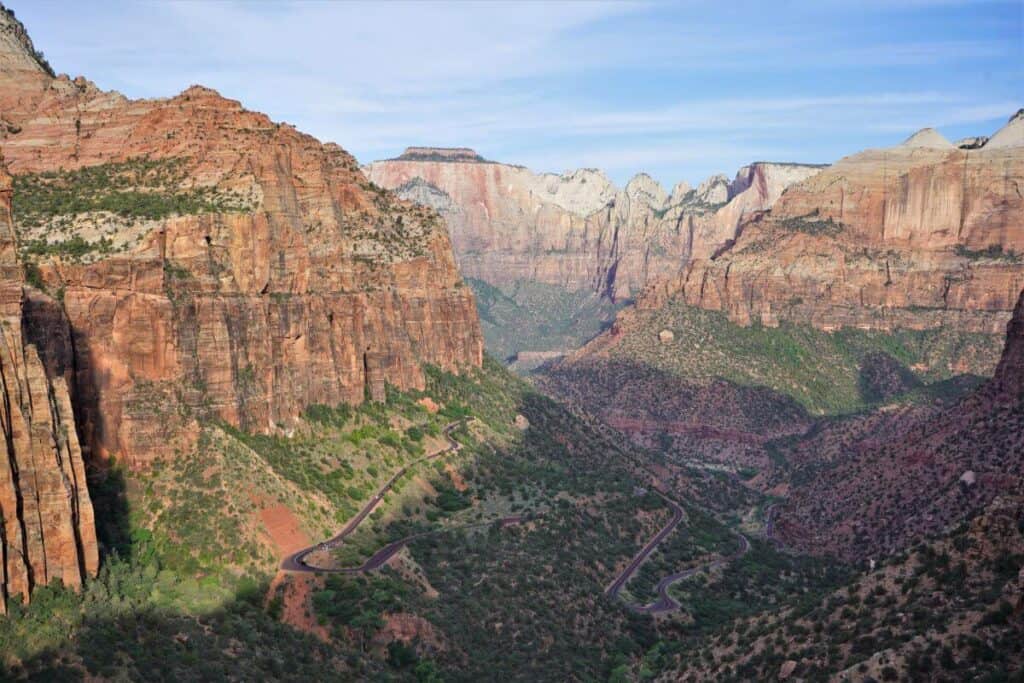
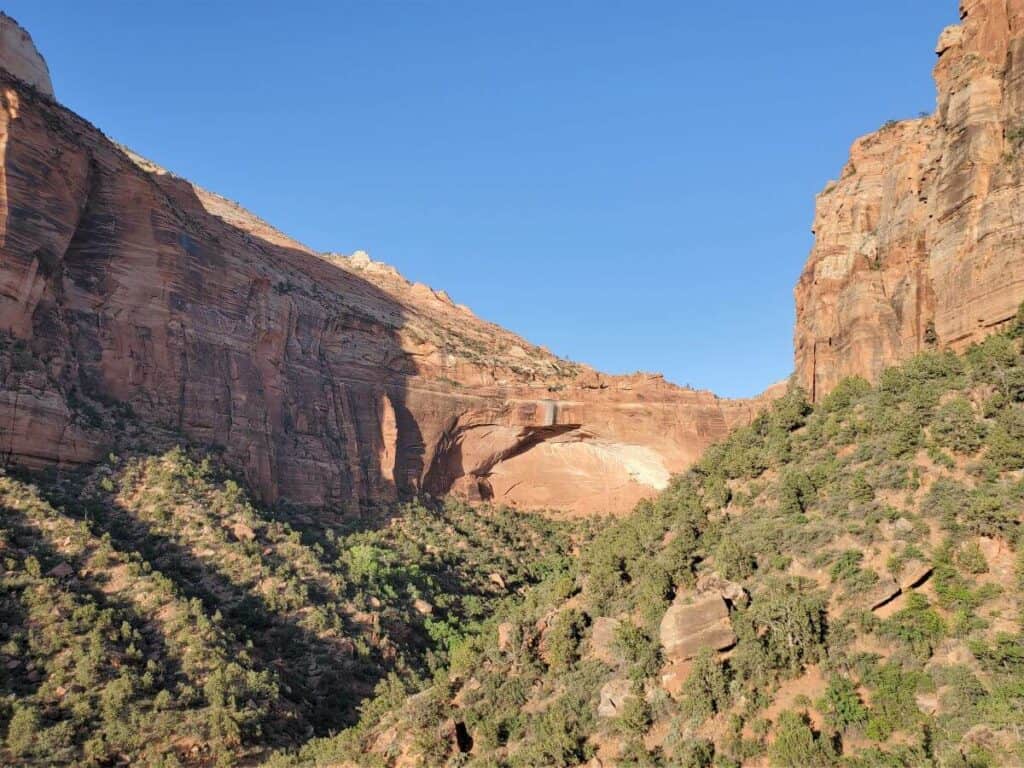
The Canyon Overlook Trail is one of my favorites in the park since it requires minimal effort for a fantastic view. At the lookout at the end, you get an aerial vista of both the Pine Creek and Zion canyons.
The 1-mile, round-trip hike begins on the east end of the Zion-Mount Carmel Tunnel. It’s moderately difficult due to the uneven terrain, with just 163 feet of elevation gain.
This trailhead is not on the shuttle route since it’s above the canyon, and parking is limited. If you visit during a busy time, you may have to find a spot in designated roadside pullouts further down the Zion-Mount Carmel Highway.
Watchman Trail
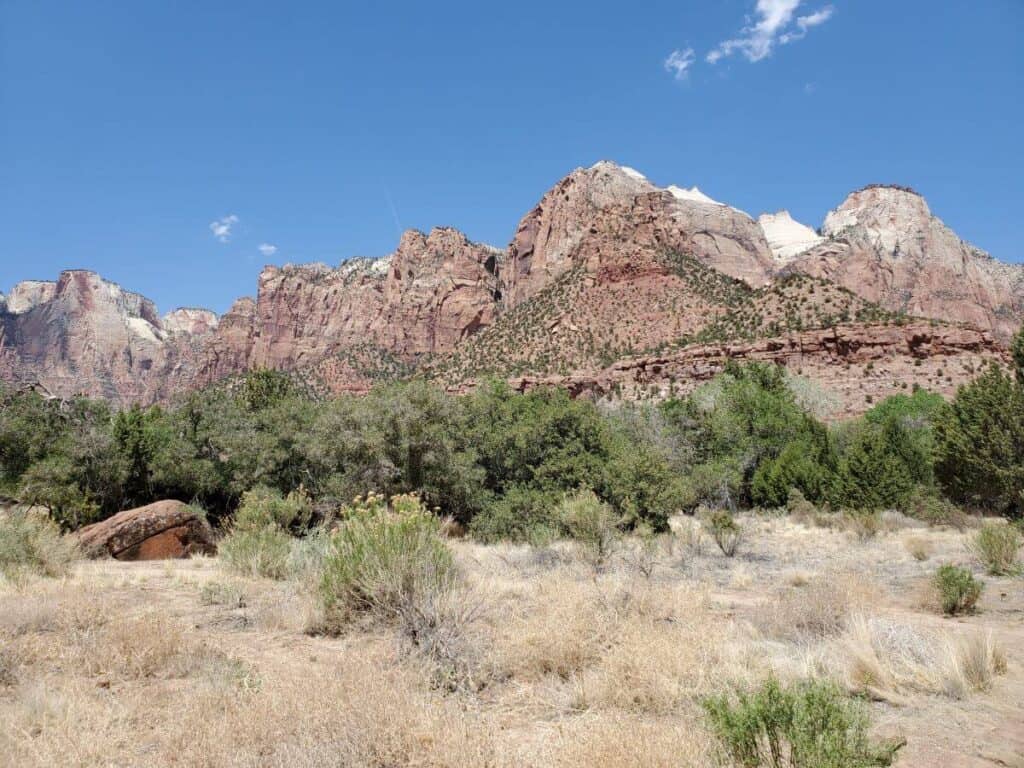
With a trailhead near the visitor center, the Watchman hike is a great alternative to some of the more popular and crowded ones deeper in the park. The first stretch of the trail starts along the river before it climbs up to an overlook of the lower Zion Canyon, the Temple and Towers formations, and Watchman Peak.
It’s a moderately difficult hike of 3.3 miles round trip with 368 feet of elevation change. Set aside a couple of hours to have time to enjoy the view.
Pa’rus Trail
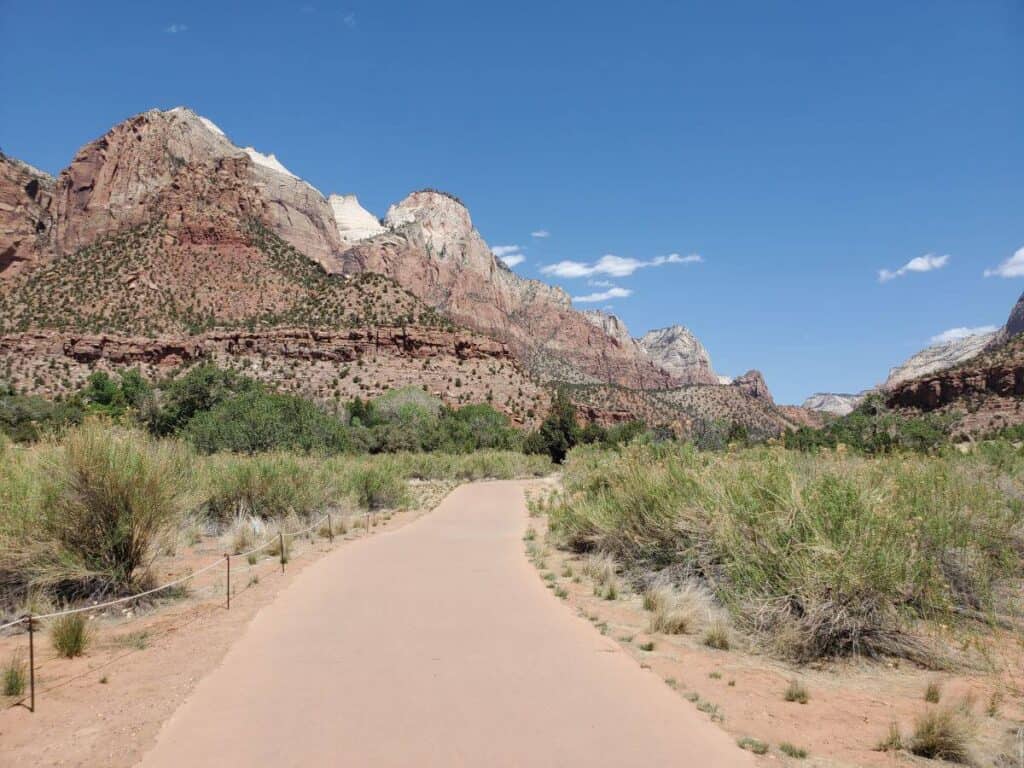
One of the easiest and most convenient walking and biking paths in the park, the Pa’rus Trail starts near the visitor center and runs along the Virgin River at the floor of the canyon. It’s paved and multi-use and the only Zion trail that allows pets (on a leash).
The trail is 3.5 miles if you walk the whole thing and back, but you can do a shorter portion if you don’t have enough time for the whole thing. A few exhibits are scattered along the way, and you’ll get beautiful views of the colorful canyon walls overhead.
Weeping Rock Trail
One of the few easy hikes in Zion National Park, the Weeping Rock Trail is less than half a mile in total but gains nearly 100 feet in elevation. Located near shuttle stop 7, the paved trail leads to an alcove carved into the rocks with a dripping spring. There are a few exhibits along the path, so this is a good one to take slow with kids or less able hikers. You’ll only need about 30 minutes for the Weeping Rock Trail.

Biking Trails
All roadways in the park are open to bicycles and E-bikes (except the Zion-Mount Carmel Tunnel) and several outfitters are available in Springdale for rentals.
Zion Canyon Scenic Drive is a fun path to take since you can only access the route via shuttle for most of the year. Also known as Floor of the Valley Road, it leads into the canyon as it narrows and ends at the Temple of Sinawava. It’s just over 7 miles from the visitor center to the end of the road, and you can ride the shuttle in one direction if you don’t want to bike the whole way out and back.
Other fun routes in the park include the 5-mile (each way) Kolob Canyon Road in a red-rock section of the park and the 3.5-mile Pa’rus Trail along the river, the only park trail you can cycle on.
Zion Canyon Scenic Drive
Whether you hike or not, every visitor to Zion National Park should plan to sightsee along Zion Canyon Scenic Drive at some point. The route leads from the visitor center into the heart of the canyon, where the colorful walls soar overhead and close in as you approach the end of the road at the Temple of Sinawava.
Private vehicles can drive the route when the shuttle is not running, usually from late November through February. For the rest of the year, the road is only accessible via shuttle or bike.
The shuttle has nine stops beginning at the visitor center, and you can either hop on and off to access various trails and lookouts along the way, or ride the whole route out and back for a simple and free sightseeing excursion.
You should allow roughly an hour and a half to two hours just for riding the shuttle out and back, plus more time for hikes along the way if you plan to hop off.
Zion-Mount Carmel Highway
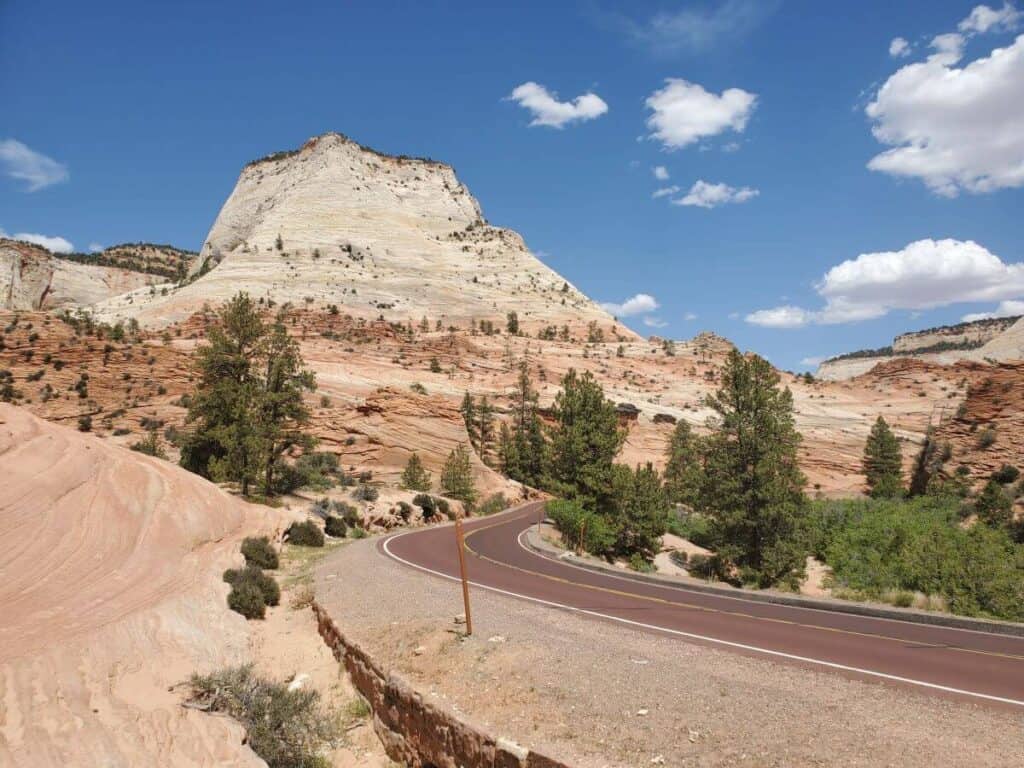
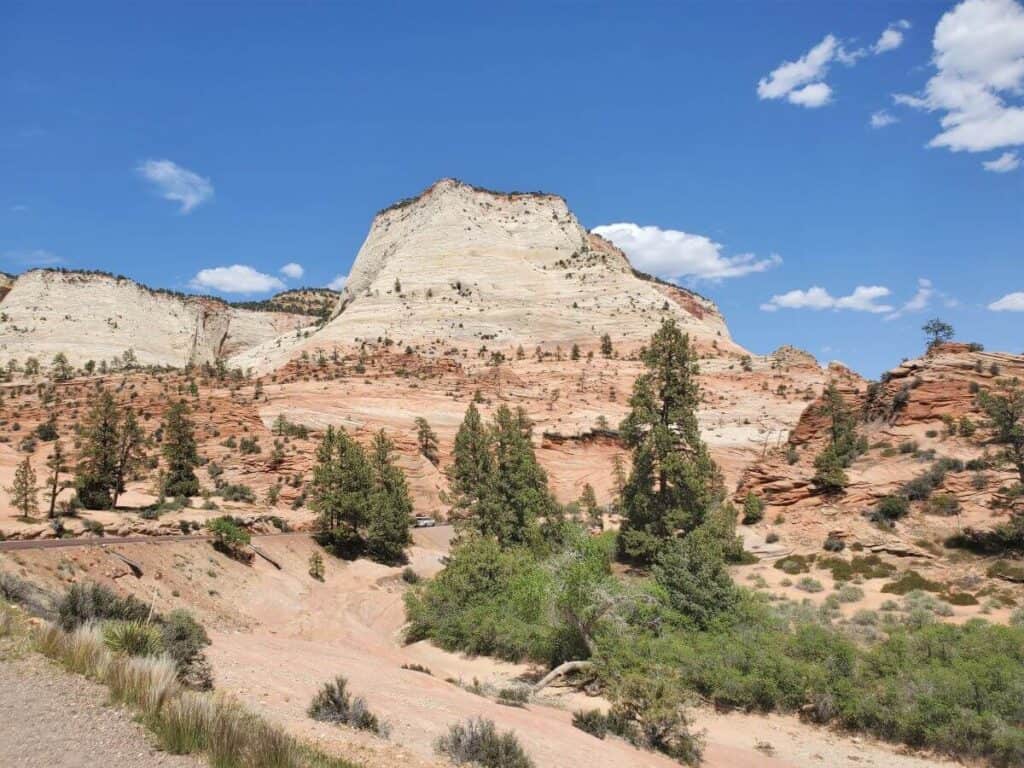
Driving the Zion-Mount Carmel Highway is one of my absolute favorite things to do in Zion National Park. From the east end, the road winds through pink cliffs and cool checkerboard-patterned hills before descending on tight switchbacks to the canyon floor.
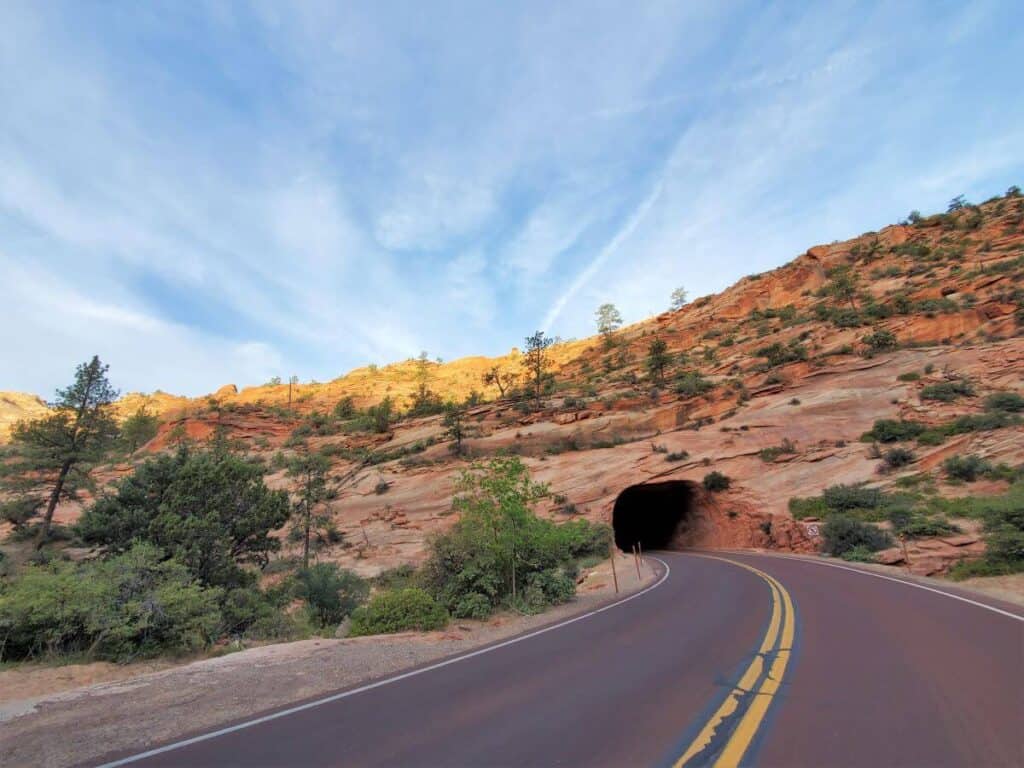
Just before the switchbacks on the way down, you’ll encounter the Zion-Mount Carmel Tunnel, a 1.1-mile route through the rocks that’s on the National Register of Historic Places. It opened in 1930, and at that time was the longest tunnel of its kind in the country.
You can drive this route on the way into the park if you’re coming from Bryce Canyon National Park, Page, or the Grand Canyon North Rim, or take it on your way out. I highly recommend it as a scenic driving excursion even if it doesn’t fit into your road trip route.
Kolob Canyons Drive
Kolob Canyons is in a different section of the park than Zion Canyon, so many people overlook it on a short trip to the park. This area is much less crowded though, so it’s a fun place to explore and hike.
Kolob Canyon Road is the 5-mile scenic route through this section that leads to a few different trailheads as it climbs uphill. You’ll need less than an hour to drive it out and back with stops at scenic overlooks, but I recommend adding on the short hike to the Timber Creek Overlook for some of the best views of the Kolob Canyons.
Timber Creek Overlook Trail
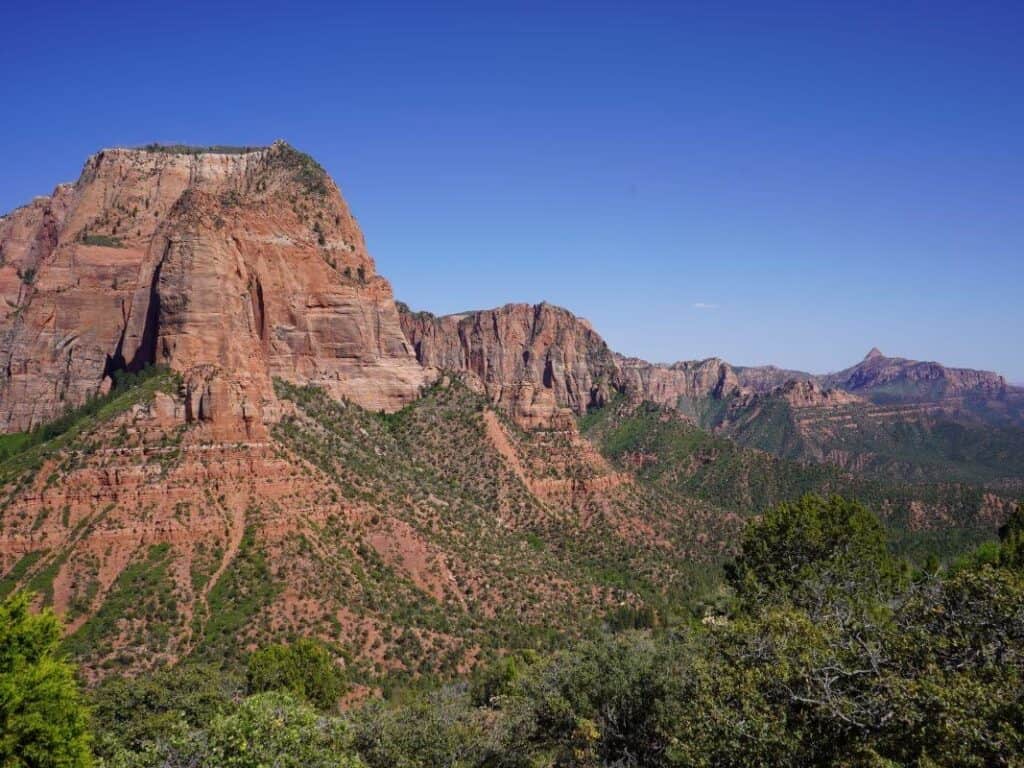
The Timber Creek Overlook Trail begins at the end of Kolob Canyon Road and is the shortest and easiest trail in this section of the park. Only about a 1-mile round trip, the path follows a ridge with minimal elevation gain and ends at a vista of the Kolob Canyons, Kolob Terrace, and Pine Valley Mountains.
Zion Human History Museum
While you’ll want to spend most of your 2 days at Zion outdoors, carve out some time to visit the Zion Human History Museum. Located near the south entrance of the park, the museum shares exhibits about the wildlife, plants, and people native to this area.
Learning how water shaped the canyon will help you appreciate the scenery even more as you see the soaring walls close in while hiking in the river at the Narrows or cruising down Zion Canyon Scenic Drive.
Ranger Programs
There are all sorts of ranger-led programs the whole family can participate in during your 2 days in Zion Canyon. These activities are especially great for those who don’t plan to spend much time hiking on a short visit to Zion.
The availability changes throughout the year, but some programs include a 2-hour guided shuttle ride into the canyon with a ranger, a hike with a ranger on the Watchman Trail, and educational presentations at the Zion Human History Museum. Evening ranger events take place from May through October at the Watchman Campground Amphitheater.
There are also Junior Ranger programs and activity booklets available at the visitor center. Kids ages 4 and up can participate to earn a Junior Ranger badge at the park.
Zion Camping
Staying past nightfall in Zion National Park gives a whole new perspective, as the crowds file out and the sights and sounds of nature take over. The park aims to reduce light pollution so you can see the dark skies brightened by stars.
Camping in Zion is the best way to experience the park after dark and there are two campgrounds near the Zion Canyon Visitor Center that you can check into. The Watchman Campground has group, tent, and RV sites with hookups, while the nearby South Campground is a bit more primitive.
If the park campgrounds are full, you can look for additional ones in Springdale, just outside the west entrance.
2 Days in Zion National Park Itinerary Ideas
The 2 day Zion National Park itineraries below include options for max adventure or simple sightseeing.
Adventurous Zion National Park 2 Day Itinerary
Day 1 in Zion
Morning: Ride the shuttle to the Temple of Sinawava and hike the Riverside Walk and The Narrows
Lunch: Picnic at the Grotto or lunch at Zion National Park Lodge
Afternoon: Zion Canyon Scenic Drive sightseeing and hike the Emerald Pools trails
Evening: Sunset from the Watchman Trail or Pa’rus Trail
Day 2 in Zion
Morning: Hike the West Rim Trail to Angel’s Landing
Lunch: Picnic and rest at the Grotto or lunch in Springdale
Afternoon: Hike the Canyon Overlook Trail and drive Zion-Mount Carmel Highway (out of the park if continuing east or drive out and back with a sunset hike at Canyon Overlook)
Evening: Sunset from the Canyon Overlook Trail
Mild to Moderate 2 Day Zion Itinerary
Day 1 in Zion
Morning: Ride the shuttle to the Temple of Sinawava and hike the Riverside Walk
Late Morning: Hike the Emerald Pools trails
Lunch: Picnic and rest at the Grotto or Zion National Park Lodge
Afternoon: Drive Kolob Canyons Road and hike Timber Creek Overlook Trail
Evening: Sunset from the Timber Creek Overlook Trail
Night: Ranger program at Watchman Campground Amphitheater
Day 2 in Zion
Morning: Bike Zion Canyon Scenic Drive or the Pa’rus Trail or hike the Watchman or Pa’rus Trail
Late morning: Zion Human History Museum
Lunch: Picnic along Pa’rus Trail or lunch in Springdale
Afternoon: Visit Zion Human History Museum, scenic drive on the Zion-Mount Carmel Highway, and hike the Canyon Overlook Trail (exit the park to the east or return to Springdale).
Sightseeing 2 Day Itinerary Zion National Park
Day 1 in Zion
Morning: Ride with a Ranger tour on Zion Canyon Scenic Drive
Lunch: Picnic at the visitor center or lunch in Springdale
Early afternoon: Zion Human History Museum and Ranger Talks
Late afternoon: Drive Kolob Canyon Road and stop at overlooks
Night: Ranger program at Watchman Campground Amphitheater
Day 2 in Zion
Morning: Walk or bike along Pa’rus Trail or ride the shuttle to Temple of Sinawava and follow the Riverside Walk
Lunch: Picnic along Pa’rus Trail or lunch at the Zion Lodge or Springdale
Afternoon: Ranger Programs and scenic drive on the Zion-Mount Carmel Highway (exit park to the east or return)
Tips for Visiting Zion National Park
Below, I’ve rounded up some tips for where to stay, how to get permits, and other important things you need to know for your 2 day Zion itinerary.
Take the Zion Pledge
Zion is one of the most popular parks in the country, and with more visitors come more safety and crowding issues. The national park has instituted a Zion Pledge initiative to educate guests about protecting the park and themselves while enjoying the outdoors.
I invite you to read the entire pledge here and commit to the principles. Some of the key points include the following:
- Plan ahead for your visit, prepare for hikes, and read warnings
- Never touch, feed, or approach wildlife
- Never collect plants, stack rocks, or vandalize (carve your name, etc) on canyon walls and trees
- Do not enter narrow canyons when there is a chance of flash flooding
- Stay on established trails
- Pack out all waste, dispose of trash and food correctly, and recycle when possible
Check out our National Parks Bucket List by state!
How to Get to Zion National Park
Flying in for your 2 day Zion trip? The nearest airports are St. George Regional Airport, 45 miles from Springdale, and Harry Reid International Airport in Las Vegas, about 175 miles away. If you’re only spending one or two days in Zion and not continuing on to another destination, you can book guided tours and shuttles from Las Vegas.
For a longer road trip, I recommend exploring southern Utah and northern Arizona to visit the other national and state parks in this area. This Zion, Bryce, and Grand Canyon itinerary is a great place to start, with options for a 4 to 7 day road trip. This longer Grand Circle road trip incorporates all five Utah national parks with ideas for a 1 to 2 week itinerary.
How to Get Around in Zion National Park
There are a few different ways to get around during your 2 days in Zion National Park, and you will likely need to use at least a couple of them. To access Zion Canyon Drive between March and November, you have to use the free national park shuttle that departs from the visitor center.
The Zion Canyon Visitor Center parking lot often fills up very early in the morning during the busy season. This is the best place to park to ride the free shuttle, so plan to arrive early. Whenever the parking is full, you’ll have to park in a paid lot in Springdale and ride the town shuttle that connects to Zion.
To see the rest of the park, you’ll need to drive in your own vehicle or book a tour. You can also rent bikes in Springdale to ride on park roads.
Where to Stay in Zion National Park
When deciding where to stay in Zion, the first thing to do is figure out whether you want to stay inside or outside the park and whether you’d rather camp or book a hotel. When you have just 2 days in Zion, I recommend staying in or near the park if possible to maximize your time.
Inside Zion National Park, there are a couple of campgrounds near the south entrance at Springdale and a lodge deeper in the canyon. The Watchman Campground and South Campground are located near the visitor center and have tent and RV sites. If you can get a reservation, Zion Lodge is a beautiful property at the foot of the cliffs with cabins, hotel rooms, and a restaurant and cafe. Reservations open about a year in advance and do sell out during the busy season.
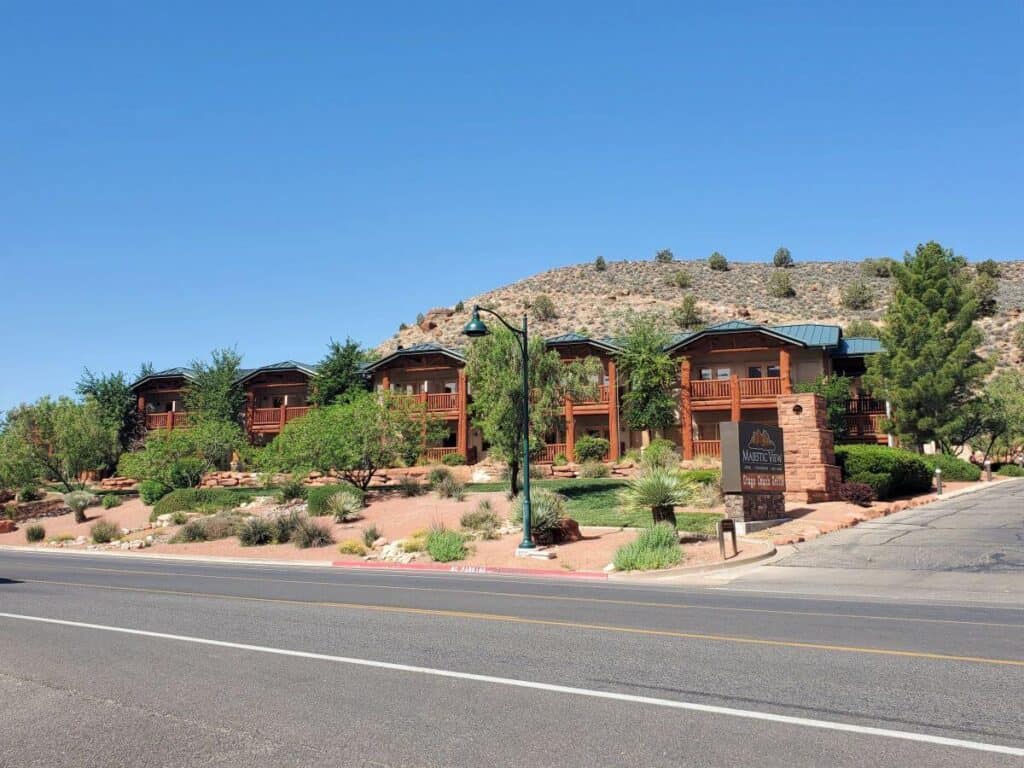
Outside of Zion, Springdale is the nearest town, located near the southern entrance with shuttles that connect to the national park for easy access. In and around the town, you’ll find chain hotels, lodges, small inns, glamping properties, and campgrounds. There are also plenty of shops and restaurants around Springdale.
For a more budget-friendly option, I like to stay in Kanab, a town about 30 miles southeast of the park and centrally located to other regional destinations like Bryce Canyon National Park, Lake Powell and Page, and the Grand Canyon North Rim, all roughly within 80 miles. It usually has more affordable accommodations than Springdale and it’s a beautiful drive into the park on the Zion-Mount Carmel Highway.
Check out this guide for the best places to stay near Zion.
Best Time to Visit Zion National Park
Zion National Park is open all year, but some services and programs only run during the high season, which is roughly May through September. Since Zion is one of the most visited parks in the country, it’s often crowded in spring and fall as well.
The summer season in Zion is when all services and ranger programs are fully available. The middle of summer can get pretty hot, with highs topping 100 degrees. Expect lots of crowds and fully booked hotels and campgrounds during this time. During the monsoon season in late summer, it’s especially important to be aware of flash floods, but they can happen at any time (not just in summer).
Fall and spring in Zion have great hiking weather, with daytime highs typically in the 60s and 70s and lows dropping to the 30s and 40s in the shoulder months of March, April, October, and November. The free park shuttles run during this time, but some park amenities and services have more limited hours.
Winter is the low season in Zion. The shuttle does not run and some trails and roads may close. The Zion Canyon Visitor Center remains open, though. During this time, you can drive Floor of the Valley Road, which is closed to private vehicles the rest of the year when the park shuttle is available. Winter highs usually average in the 50s and lows are below freezing. Snow typically accumulates at the higher park elevations but melts pretty quickly at the floor of Zion Canyon.
Read more about visiting Zion National Park in winter!
Zion National Park Fees and Passes
You have to pay an admission fee to enter Zion National Park. Tickets are good for 7 days and are sold per vehicle or per person for walk-ups. If you plan to visit other national parks on the same trip or within a year, it often makes sense to purchase an annual America the Beautiful pass for access to over 2,000 different federal recreation sites.
You do not need an advance reservation to enter Zion National Park, but you do need a permit for certain activities in the park. The most common one is for the hike to Angel’s Landing. Permits for the trail are distributed using a lottery system. You can get find all of details for how to apply here.
How Many Days Do You Need at Zion National Park?
I recommend spending at least 2 days in Zion National Park for your first visit. For people who only plan to hike shorter trails, this is usually enough time for an overview of the Zion Canyon section of the park.
With two days, you can ride the shuttle into the canyon on one and hop off for a few hikes. The second day can be spent on trails near the visitor center, driving the scenic Zion-Mount Carmel Highway, or exploring the Kolob Canyons section of the park.
If you want to hike to both Angel’s Landing and The Narrows, a 2 day Zion itinerary is technically enough time for the two trails. But, you may not be able to experience other parts of the park, or you may be too tired to hike them on back-to-back days, depending on your fitness level.
If you’d like to explore off-the-beaten-path parts of the park or hike longer trails, you also may want to spend more than two days in Zion.