The Best One Day in Grand Canyon National Park Itinerary for Your First Time
This travel guide will help you plan the perfect day at Grand Canyon National Park! Experience breathtaking views, go for a scenic hike, and watch an epic canyon sunset on a day trip.
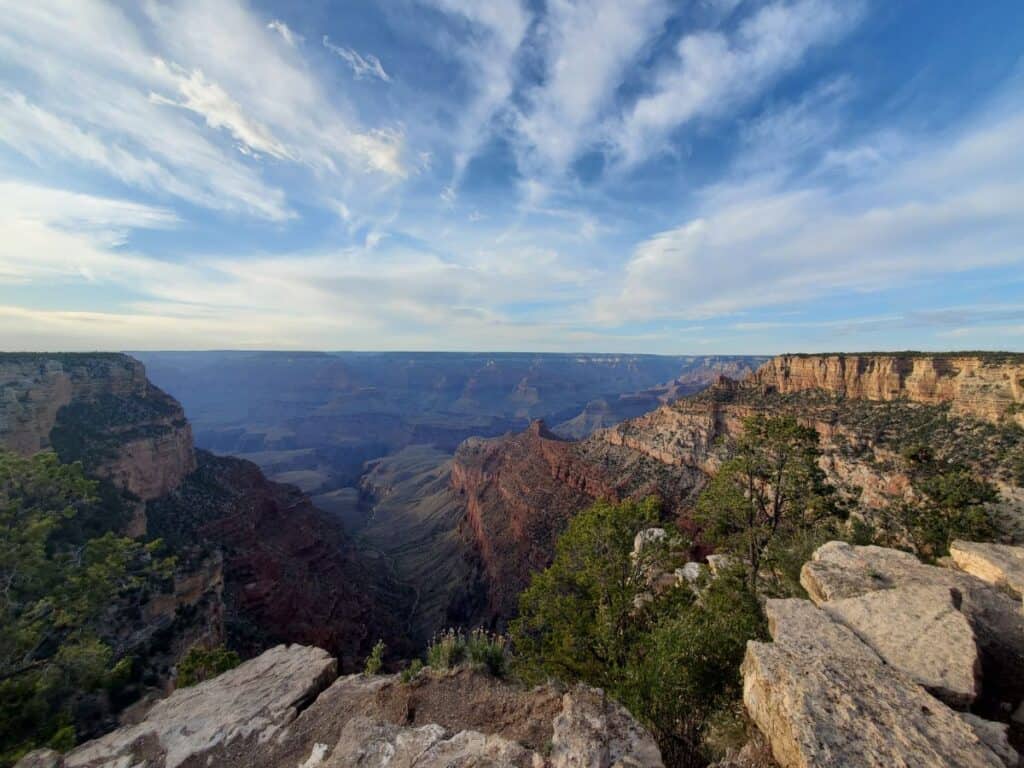
Visiting Grand Canyon National Park in just one day might sound impossible when you consider this bucket list destination in Arizona covers over 1 million acres and stretches 277 miles long. Despite the size, you can actually pack a surprising amount of sightseeing and adventure into 24 hours at the Grand Canyon if you’re strategic about it.
When I was a kid, we spent just one day at the Grand Canyon on a road trip out West. The memories from that brief excursion made me want to return several times as an adult. While I prefer to stay for at least a couple of days at a time in the national park, it’s definitely possible to visit on a shorter trip and take in the views. After all, your first glimpse of the gorge from the rim will blow your mind in a minute!
Whether you’re squeezing in a weekend escape or adding the park to a longer road trip in Arizona and Utah, a single day at the Grand Canyon gives you enough time for a morning hike, photos at the most stunning overlooks, a stroll along the canyon edge, and an unforgettable sunrise or sunset experience.
This Grand Canyon itinerary focuses on the South Rim, which is the most popular section and open year-round. The schedule kicks off at dawn to maximize your time. Don’t worry if you arrive later — just pick up from the next activity on the list. I’ve laid out everything from sunrise to stargazing so you can make the most of your time at one of the country’s most iconic national parks.
What’s at Grand Canyon South Rim?
Since this itinerary takes you to the Grand Canyon National Park South Rim, here’s a quick overview of what you can expect from this zone.
Grand Canyon National Park has two sections, a North Rim and South Rim. Even though they aren’t that far from each other across the canyon, it takes about 5 hours to drive from one to the other, and between 21 to 24 mile to hike from rim to rim.
The South Rim is the most developed and most popular, with several lodges and visitor centers. It’s where most people go for their first trip to the Grand Canyon and closer to hubs like Las Vegas and Phoenix. The North Rim is typically only open from mid-May to mid-autumn due to road conditions, but it has some beautiful lookouts and is generally less crowded. A recent fire destroyed the lodge and cabins at the North Rim, so there’s not a lot in the way of amenities there currently.
The Grand Canyon South Rim breaks down into three main sections – Grand Canyon Village, Hermit Road, and Desert View Drive. Grand Canyon Village and the Visitor Center make up the busy central hub, where you’ll find hotels, restaurants and services like a grocery store, post office and gift shops.
The western section on Hermit Road extends seven miles west from the village and is lined with scenic overlooks. This road dead ends at Hermits Rest, which has restrooms and a snack counter. To the east, the 22-mile Desert View Drive has several lookouts leading to Desert View, where there’s a watchtower, campground, gas station and market. Past this point, the road continues to the eastern entrance/exit of the park.
One Day Grand Canyon National Park Itinerary
This Grand Canyon South Rim itinerary is designed to help you hit the highlights without feeling rushed. You can follow the guide exactly as-is, or skip activities that don’t interest you to spend more time on the ones that do.

Witness Sunrise at Grand Canyon National Park
Set your alarm early and head out while it’s still dark to catch sunrise from the rim of the canyon. Waking up before dawn isn’t exactly fun, but Grand Canyon sunrises are stunning and draw way smaller crowds than sunset at the South Rim. You’ll actually be able to find a peaceful spot to watch the sky turn pink in the morning.
Mather Point near the Grand Canyon Visitor Center is one of the best sunrise spots, since it juts out into the canyon with views facing east. It’s popular, so you’ll see other early risers, but you can wander along the rim to find your own spot.
Quick tip: The state of Arizona stays on Mountain Standard Time (MST) year-round and doesn’t observe daylight savings. That means summer sunrises happen as early as 5:10 a.m. Be sure to check the exact sunrise time when you plan your trip so you don’t miss it.
Pop Into the Grand Canyon Visitor Center
After sunrise is the best time to check out the main visitor center complex near Mather Point. This is the place to grab maps, chat with rangers about trail conditions, use the restrooms, refill your water bottles, and stamp your national parks passport book.
Depending on the time of year, the actual visitor center building may not be open right after sunrise, but there is still lots of outdoor signage to check out. Or, you can stroll the Rim Trail to the Yavapai Geology Museum, walk the Trail of Time (details below), and come back when the visitor center opens.
This is also the best place to leave your car parked and use the free shuttle buses for the rest of the day. The parking lots fill up fast, usually by mid-morning during summer and holiday weekends. There is a scenic drive that you’ll want to use your car for, but many of the trailheads and lookouts can be accessed by bus.
Hit the Trails for a Grand Canyon Hike
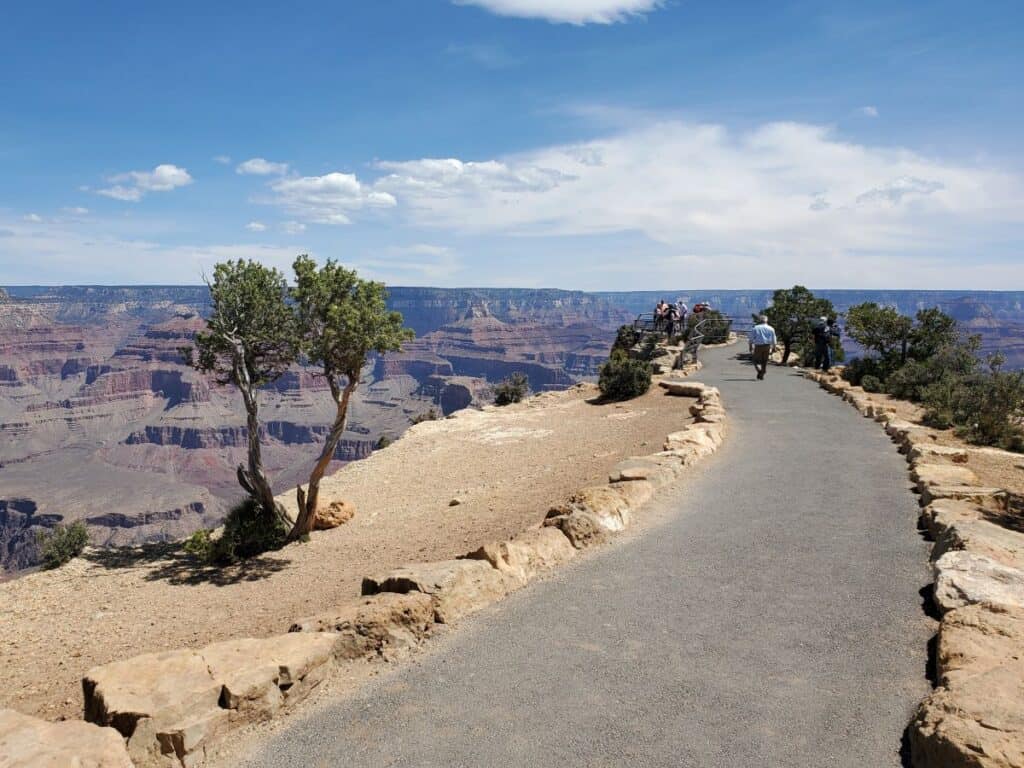
With a full day ahead, the morning is perfect for tackling one of the trails below. Starting your day hike early means fewer people on the path and cooler temperatures, which is huge when you’re hiking into the canyon. Don’t forget to bring plenty of water and snacks. The only facilities along the trails below the rim are a couple of pit toilets and hit-or-miss water stations.
The trails below range from easy and mostly flat walks along the rim to challenging hikes into the canyon, so you can pick something that matches your comfort level. There are also bike paths and rentals available in the park.
Trail of Time
The Trail of Time is the easiest rim section to walk, with geology exhibits along a 1.5 mile path. Start at Yavapai Point and head toward Verkamp’s Visitor Center.
Just past Verkamp, you’ll find a cluster of lodges and spots to grab breakfast or lunch. This short walk is the perfect way to soak in multiple viewpoints without too much effort if you’re on a day trip to Grand Canyon National Park.
Rim Trail
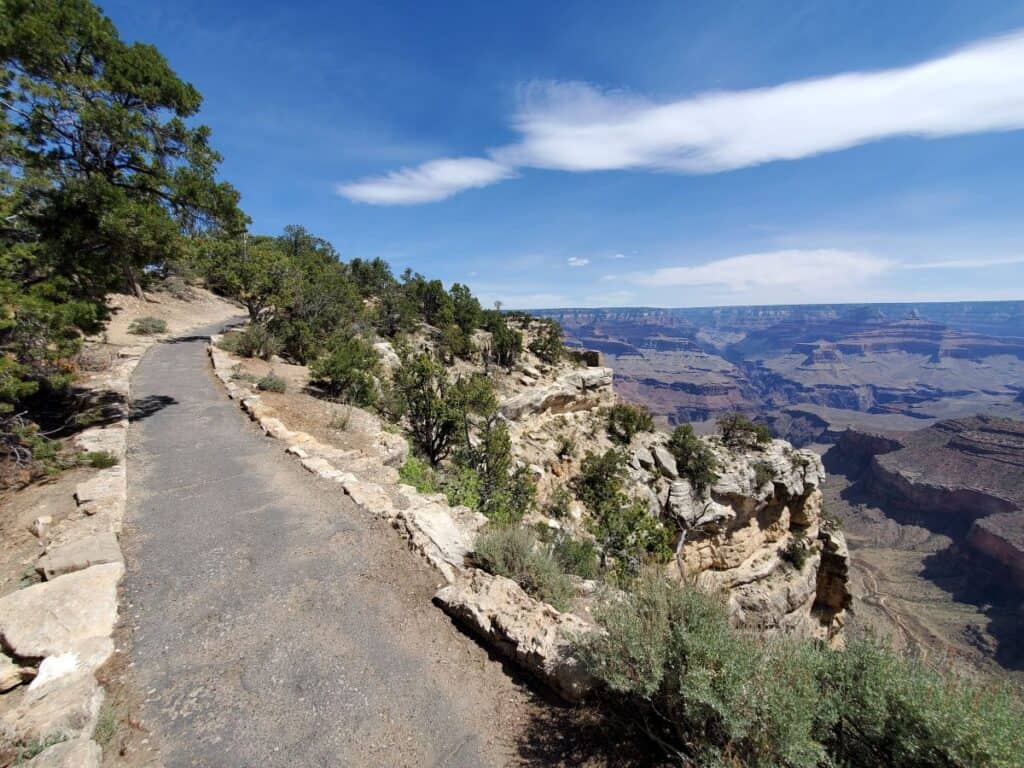
The Rim Trail follows the canyon edge for 12.8 miles one way between the South Kaibab Trailhead and Hermits Rest. Sections of it are paved and accessible (like the Trail of Time), plus shuttle buses run the whole length, so you can customize your hike to whatever distance works for you while walking between viewpoints.
The busiest section is around Grand Canyon Village and the visitor center. As you head west toward Hermit Road, the crowds thin out a lot between marked lookouts. There is shade along much of this trail, and restrooms at Hopi Point and Hermits Rest.
South Kaibab Trail
South Kaibab descends all the way to the canyon floor, but for a day hike, you’ll only want to walk down part way before turning back. Keep in mind that hiking back up takes about twice as long as going down.
In summer, the national park advises not to attempt hiking down any further than Cedar Ridge (about 3 miles roundtrip). This was my first Grand Canyon hike, and it’s perfect for a one-day visit. The 3-mile route typically takes between two and four hours.
There are basic toilets at Cedar Ridge, but no water and very little shade on this trail. You’ll also need to watch and make way for donkey parades on the trail.
Bright Angel Trail
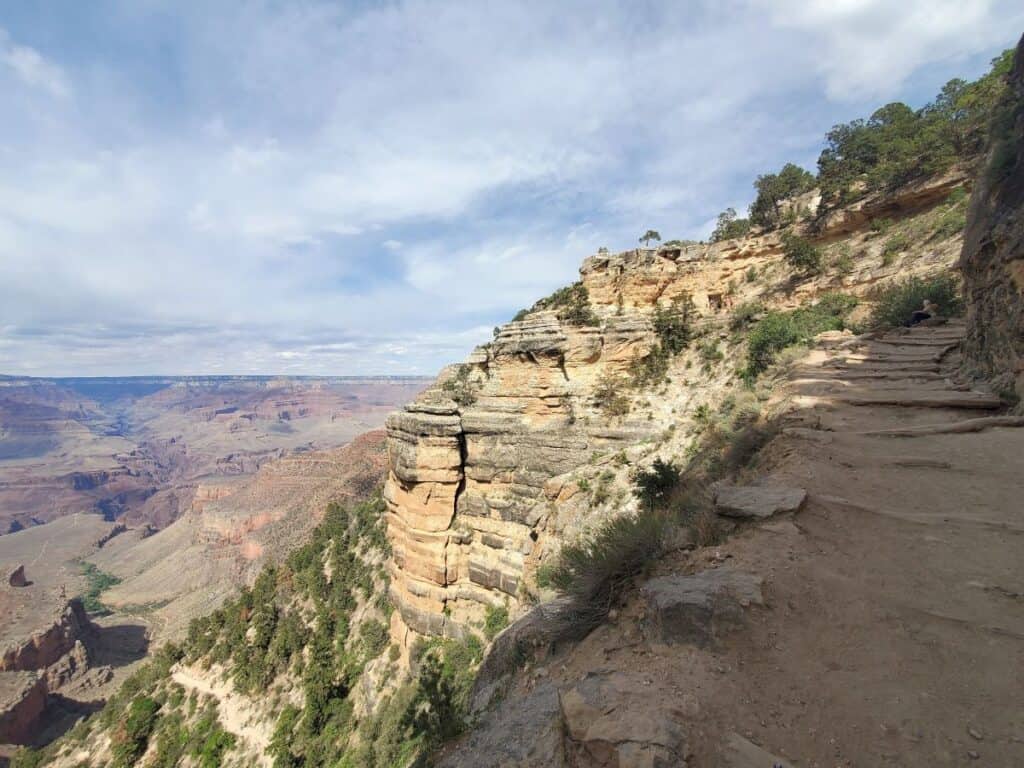
The Bright Angel Trail is often combined with South Kaibab on rim-to-rim hikes, making a loop to the canyon floor and back. The full Bright Angel trail covers 9.3 miles, but for a day hike, plan to turn around at one of the rest houses at either 1.5 or 3 miles.
The first rest house is more than 1,000 feet below the rim, and the second 2,000 feet. This means a serious climb back up at your turn around point. Water is sometimes available at stops every 1.5 miles or so along this trail, but don’t rely on it and bring enough to stay hydrated. There are basic toilets at the 1.5 and 4.5-mile marks.
Hermit Road Greenway Trail
Part of the larger Rim Trail system, Hermit Road Greenway connects the last three overlooks on the park’s west side. It’s just under 3 miles, paved, accessible, and open to both walkers and bikers — a great choice if you want something easier!
Bikers can also cruise down Hermit Road itself, but you’ll share the route with buses from March through November and cars during winter. Bike rentals are available from a counter near the visitor center. The park buses have racks if you want to catch a ride for part of the journey. Some rental companies also offer shuttle transportation and tours.
Hop Between Canyon Overlooks on the Shuttle
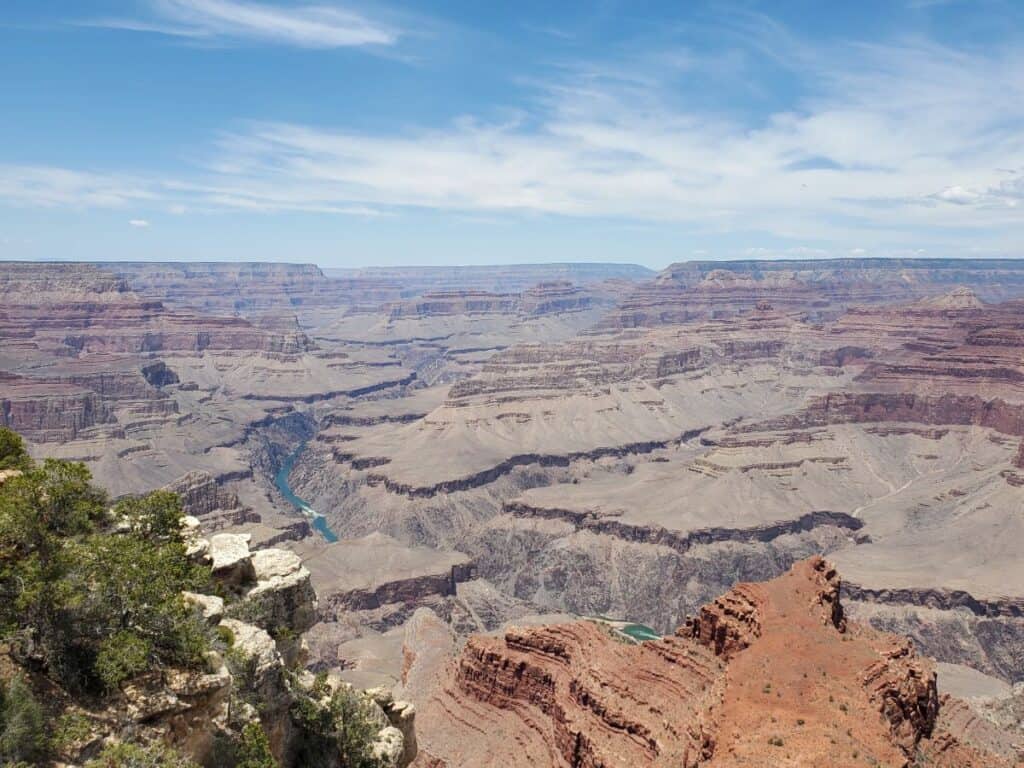
Free shuttle routes run along most of the South Rim, making it easy to hop on and off at some of the park’s best lookouts. The Hermits Rest Route (red line) operates from March through November on the western side of Grand Canyon Village, stopping at nine scenic viewpoints. When it’s not running between December and February, you can drive this road instead.
The year-round Rim Route (orange line) covers the eastern end to Yaki Point, with stops at Yavapai Point and the Yavapai Geology Museum. The Village Route (blue line) connects all the lodges, amenities and restaurants in the park. You can also walk to the canyon rim from many of these stops. Buses cycle by about every 10 to 15 minutes.
Not interested in hiking? Take your time riding the shuttle and exploring the different lookouts down toward Hermits Rest.
Take a Scenic Cruise Along Desert View Drive
After an active morning of hiking, the hottest part of the day is ideal for a scenic drive where you can relax in the air conditioning and explore some different lookouts along the South Rim.
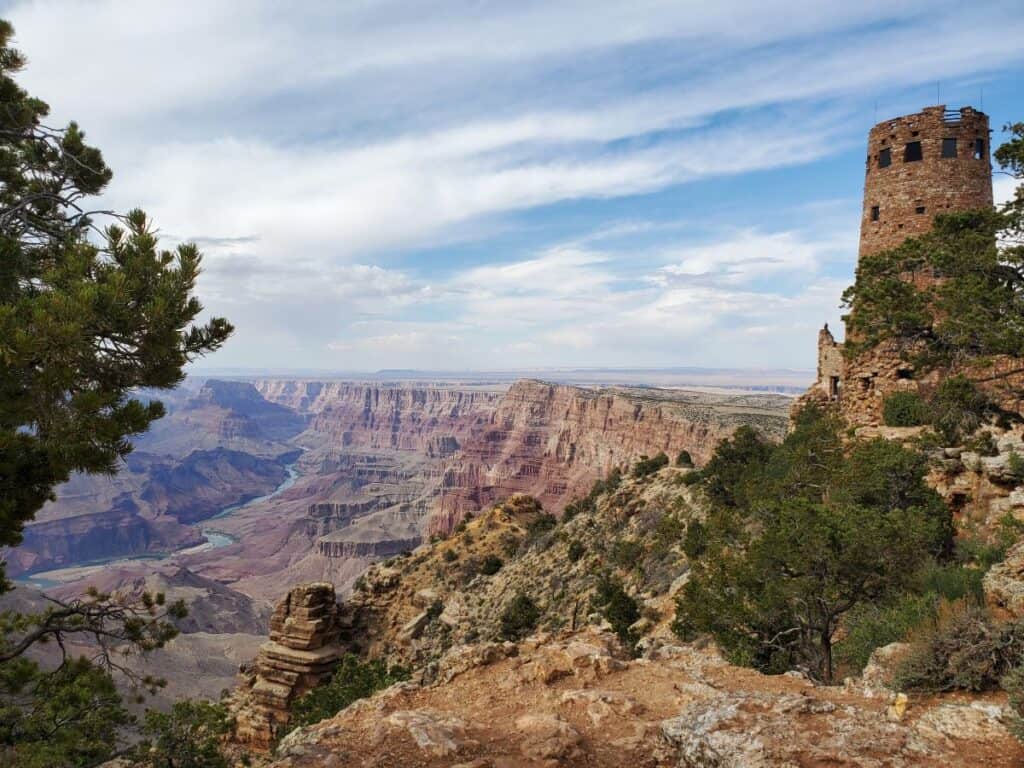
The 22-mile Desert View Drive is best to explore in your own vehicle, since the shuttles don’t take this path. This route stretches between the visitor center and the east entrance, passing several quieter overlooks and picnic areas. Along the way, you’ll find the Tusayan Ruin, an Ancestral Puebloan site with ancient artifacts and a free museum.
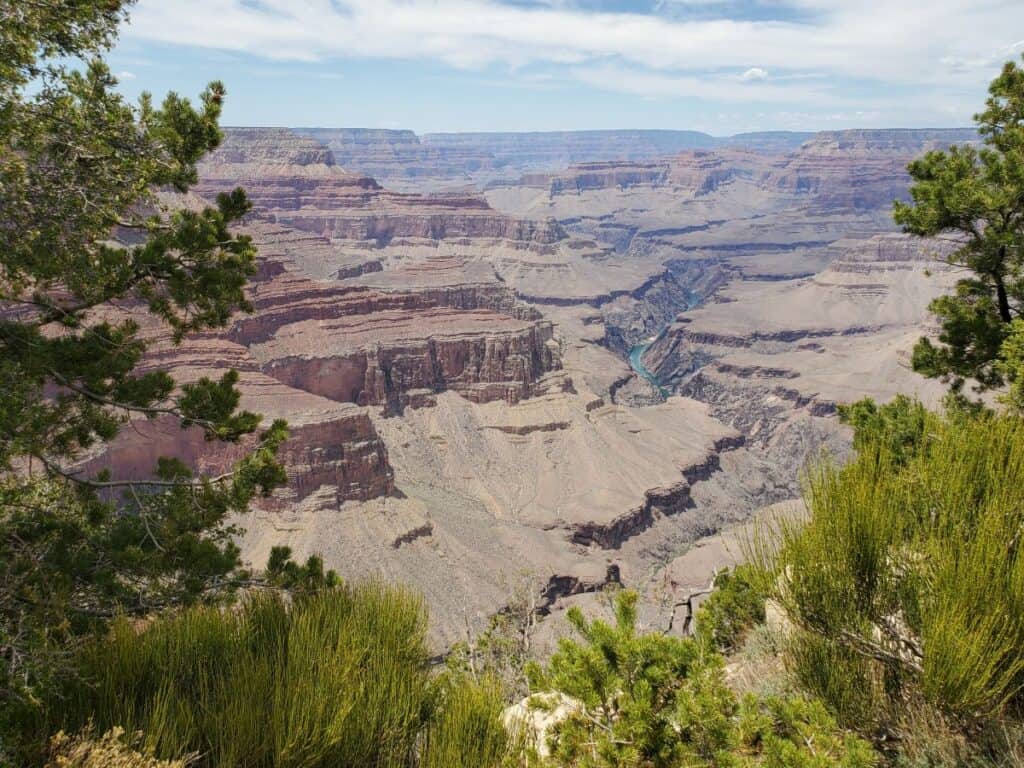
At the far end, before the park exit, sits the Desert View Watchtower. Built in 1931, this stone observation building has views of the Colorado River winding through the canyon below.
If you’re heading out of the park towards the east on a road trip, you can end the day here or stay for the sunset. There’s also a national park campground, gas station and market in the same area.
Watch a Grand Canyon Sunset
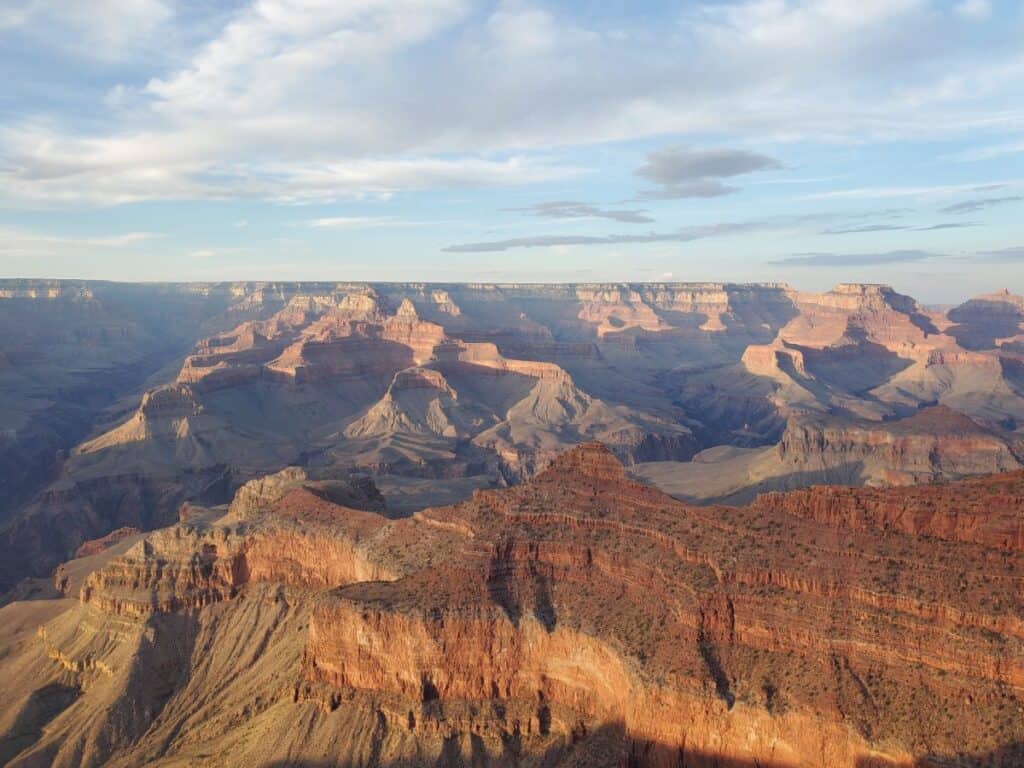
Every Grand Canyon South Rim itinerary deserves a picture-perfect sunset finale. The National Park Service points to several spots along Desert View Drive and Hermit Road as the best sunset viewing locations, but honestly, any spot on the rim will provide beautiful views of the sky changing to pastel hues.
I recommend getting to your intended spot at least an hour early to claim some space and watch the transforming colors of the sky and shadows on the canyon. Just be aware that shuttles get crowded as sunset approaches. Factor in extra time to catch a ride and be patient with the return trip, since everyone will be trying to board at the same time.
East End Sunset Views
Planning to leave the park after dark? The overlooks at Lipan, Navajo, and Desert View on the east end might be your best choice. At these ones, you can park and head out right after without waiting for a shuttle. The east-west views are incredible, and these spots tend to be less congested. If you go this route, combine it with the Desert View Drive from earlier to avoid backtracking.
Visitor Center Sunset Views
Mather Point by the Visitor Center and Yavapai Point (half a mile away) are also good for parking. Both have beautiful view but pretty big crowds, since they’re the easiest to access.
Hermit Road Sunset Views
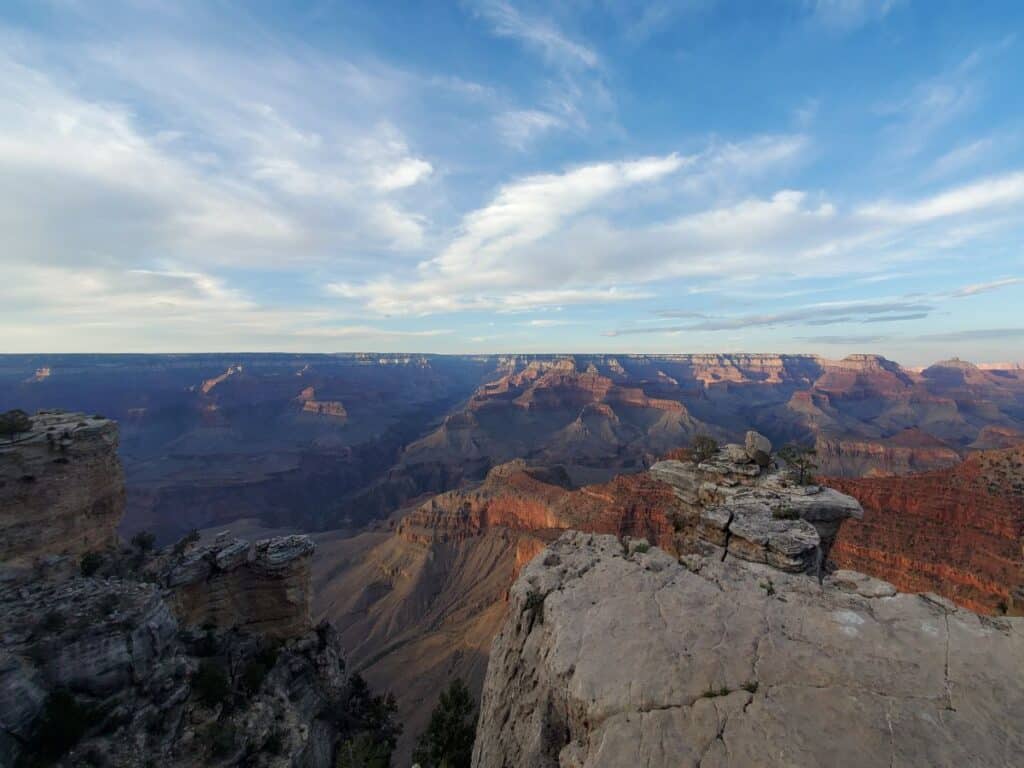
On the west end along Hermit Road, Hopi Point is easily one of the most popular Grand Canyon sunset views. You’ll need to take the red line shuttle since cars can’t access this road during the busy season (March through November). If Hopi is too packed, walk a mile west to Mohave Point, where you can spot the river below.
Between the two overlooks, you may find a quiet place to sit along the trail, though Hopi and Mohave have the best vantage points for catching all the sunset colors. Further down the red line, Pima Point typically has lighter crowds and also extends into the canyon for sweeping views.
Join a Nighttime Ranger Program
Want to squeeze even more out of your day at Grand Canyon National Park? Join an evening ranger-led program. Check the schedule for current programming, which may include guided night hikes, conservation talks, and stargazing sessions.
Planning Your One Day Grand Canyon Visit
Here are some of the essential details to help you plan your Grand Canyon South Rim day trip, from where to stay to what to expect weather-wise.
Where to Stay Near the Grand Canyon South Rim
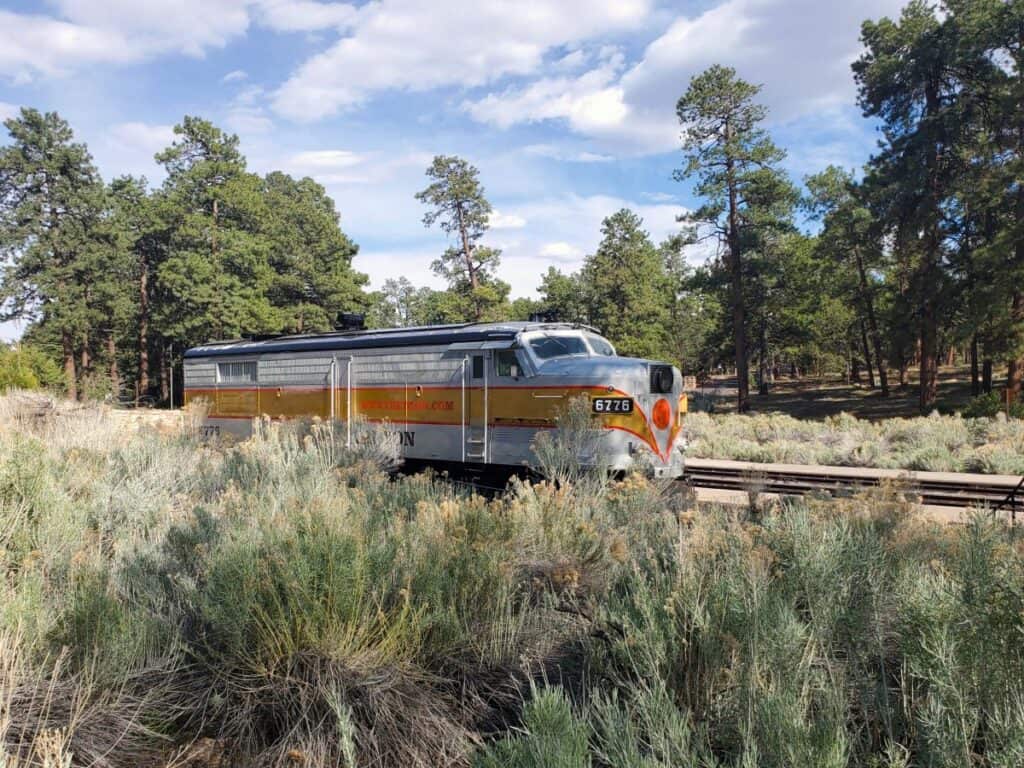
The closest accommodations to the Grand Canyon South Rim are in the park village, where you’ll find lodges and campgrounds. The town of Tusayan has hotels just outside the park. You’ll find more options about an hour away in Williams, which has a train that takes visitors to the Grand Canyon for day trips.
Getting to Grand Canyon South Rim
The nearest major airports to the Grand Canyon South Rim are Phoenix Sky Harbor International Airport (230 miles away) and Harry Reid International Airport in Las Vegas (280 miles away). There’s also a smaller airport in Flagstaff just 90 miles from the park. You can rent a car for an Arizona and Utah road trip, or book a tour that includes transportation from Vegas, Flagstaff, Sedona, and other nearby cities.
How Many Days Do You Need at Grand Canyon National Park?
With one day at Grand Canyon National park, you can see multiple viewpoints at the South Rim and even hike into the canyon for a couple of hours. Unless you’re planning a multi-day rafting trip or a rim to rim hiking adventure, one to three days at the Grand Canyon covers the highlights for most visitors.
Grand Canyon Entrance Fees
For U.S. residents, Grand Canyon admission costs $35 per car and is valid for 7 days. If you’re planning a road trip to visit other national parks with entrance fees (like Bryce Canyon or Zion National Park in Utah), consider picking up the America the Beautiful annual pass. For $80, you get access to national parks and federal recreation sites for a full year. It usually only takes three visits to national parks with standard admission fees for the pass to pay for itself.
Currently, there are additional hefty fees of $100 per person, plus the standard entrance pass fee, for non-residents to visit Grand Canyon National Park.
Best Season to Visit the Grand Canyon
The Grand Canyon South Rim stays open every day of the year, with most facilities running year-round. A couple of the shuttle routes don’t run in winter. If you have a car or visit on a tour, this isn’t an issue.
Summer at the Grand Canyon
Around 6 million people visit the Grand Canyon annually, and summer at the South Rim is the busiest season. Expect full parking lots, packed shuttles, and crowded viewing platforms around the main areas.
Your best strategy is to leave your car at the main visitor center and use the free shuttles to get around. Just know that the lot often fills up by mid-morning, so plan to arrive early.
Summer temperatures can climb above 100 degrees as you descend into the canyon, increasing by about 5 degrees for every 1,000 foot drop in elevation. This is a very dangerous time for hikes below the rim if you aren’t prepared. It’s safer to stick to easier trails and shorter day hikes.
Spring and Fall at the Grand Canyon
For the best time to visit the Grand Canyon, aim for spring or fall. These months have fewer crowds and mild weather that’s perfect for hiking. Spring break school holidays in March and April are busy, but it’s overall less crowded than in summer.
High temperatures hit the 60s and 70s during spring and fall months, with overnight lows in the 30s and 40s.